


How to Inspect Your Garage Door After Winter
Key Takeaways
1. Winter can leave behind hidden wear on garage door parts, seals, and hardware.
2. A simple post-winter inspection can help homeowners catch small issues before they become bigger repairs.
3. Raynor Door Authority can help with professional inspections, maintenance, and repairs to keep your garage door working safely after winter.
Garage Door Maintenance After Winter Checklist
Winter can be hard on a garage door in ways that are not always obvious right away. Cold temperatures, moisture, road salt, ice, and repeated freezing and thawing can all leave behind wear that affects how the door looks and how smoothly it works. That is why a post-winter check is worth doing before small issues turn into bigger repairs.
Here is a practical Garage door after-winter checklist homeowners can follow:
1. Check the Door Panels for Dents, Cracks, Warping, Rust, or Chipped Finish
Start with the most visible part of the door. Look at the panels from both inside and outside the garage to see if winter left behind dents, surface rust, chipped paint, or any signs of warping.
Even if the door still works, surface damage can be an early sign that moisture, salt, or temperature swings have started affecting the material.
2. Look at the Bottom Seal for Cracks, Flattening, Gaps, or Brittleness
The bottom seal usually takes a lot of winter wear. Ice, snow, and freezing ground contact can make it crack, harden, or lose its shape. If the seal looks flat, brittle, or uneven, it may no longer keep out drafts, water, dirt, and pests as well as it should.
3. Inspect Side and Top Weatherstripping for Wear or Looseness
The weatherstripping around the frame helps protect the garage from wind, moisture, and outside air.
After winter, check whether it is pulling away, cracking, or no longer sealing tightly against the door. Worn weatherstripping can make the garage less comfortable and let in dust or moisture.
4. Watch the Door Open and Close to See if It Moves Smoothly
Run the door through a few open-and-close cycles and watch how it moves. A healthy garage door should travel smoothly without hesitation, jerking, or dragging.
If it looks stiff or strained, winter may have affected the tracks, rollers, springs, or opener.
5. Listen for Grinding, Squeaking, Rattling, or Popping Sounds
Noise often tells you something before visible damage does. Grinding can point to track or roller issues, squeaking may suggest dry hardware, and rattling or popping can mean something is loose or wearing unevenly. A door that sounds different after winter is worth paying attention to.
6. Check for Uneven Movement or Shaking While the Door Is in Motion
If one side seems to move differently than the other, or the door shakes as it opens and closes, the system may be out of balance or under strain.
That kind of movement can come from worn rollers, spring tension issues, track problems, or hardware that has loosened over time.
7. Look at the Tracks for Dirt, Salt Buildup, Moisture, or Bent Sections
Winter can leave dirt, grit, and salt residue behind in the tracks, especially if vehicles bring snow and road debris into the garage.
Check that the tracks are clean and not bent or obstructed. Even a small buildup can interfere with smooth operation.
8. Inspect Rollers for Wear and Make Sure They Move Freely
Rollers help the door move along the tracks, so they need to stay in good condition. Look for worn edges, cracks, or rollers that seem stiff or damaged.
If they are not rolling smoothly, the door may become noisier and put extra stress on other parts.
9. Visually Check Springs for Rust, Gaps, or Stretching
Springs do the heavy lifting, so they are one of the most important parts to inspect after winter. Look for rust, visible gaps, or signs that the spring looks stretched or worn.
This should only be a visual check, since springs are under high tension and should not be adjusted by homeowners.
10. Look at Cables for Fraying, Looseness, or Visible Wear
Cables work closely with the springs to help lift and lower the door safely. Check for frayed strands, slack areas, or other signs of wear.
If a cable looks damaged, that is not something to ignore, because cable failure can affect both performance and safety.
Winter Quietly Ruined Your Garage Door, Here’s How to Fix It
11. Tighten Any Loose Bolts or Brackets That Are Safe to Access
Repeated movement, vibration, and seasonal expansion and contraction can loosen hardware over time. If you notice accessible bolts or brackets that have clearly loosened, tighten them carefully.
Focus only on safe-to-reach hardware and leave anything tied to springs or high-tension components alone.
12. Test the Door Balance to See if It Feels Unusually Heavy
A balanced garage door should not feel overly heavy when operated manually. If the door suddenly feels hard to lift or does not stay controlled during movement, that can point to spring or tension problems.
A balance issue often shows up after winter because cold weather can add stress to already worn parts.
13. Check the opener, wall control, and remotes for normal response
Do a quick function check of the opener system. Make sure the wall button, remotes, and opener respond the way they normally do. If the opener seems slower, louder, or less consistent than usual, the door may be putting extra strain on it.
14. Test the Safety Sensors and Auto-Reverse Feature
Safety features should always be part of seasonal garage door maintenance. Make sure the photo-eye sensors are aligned and working, and test the auto-reverse system to confirm the door responds properly.
Winter dust, moisture, or accidental bumps can affect these components without making it obvious.
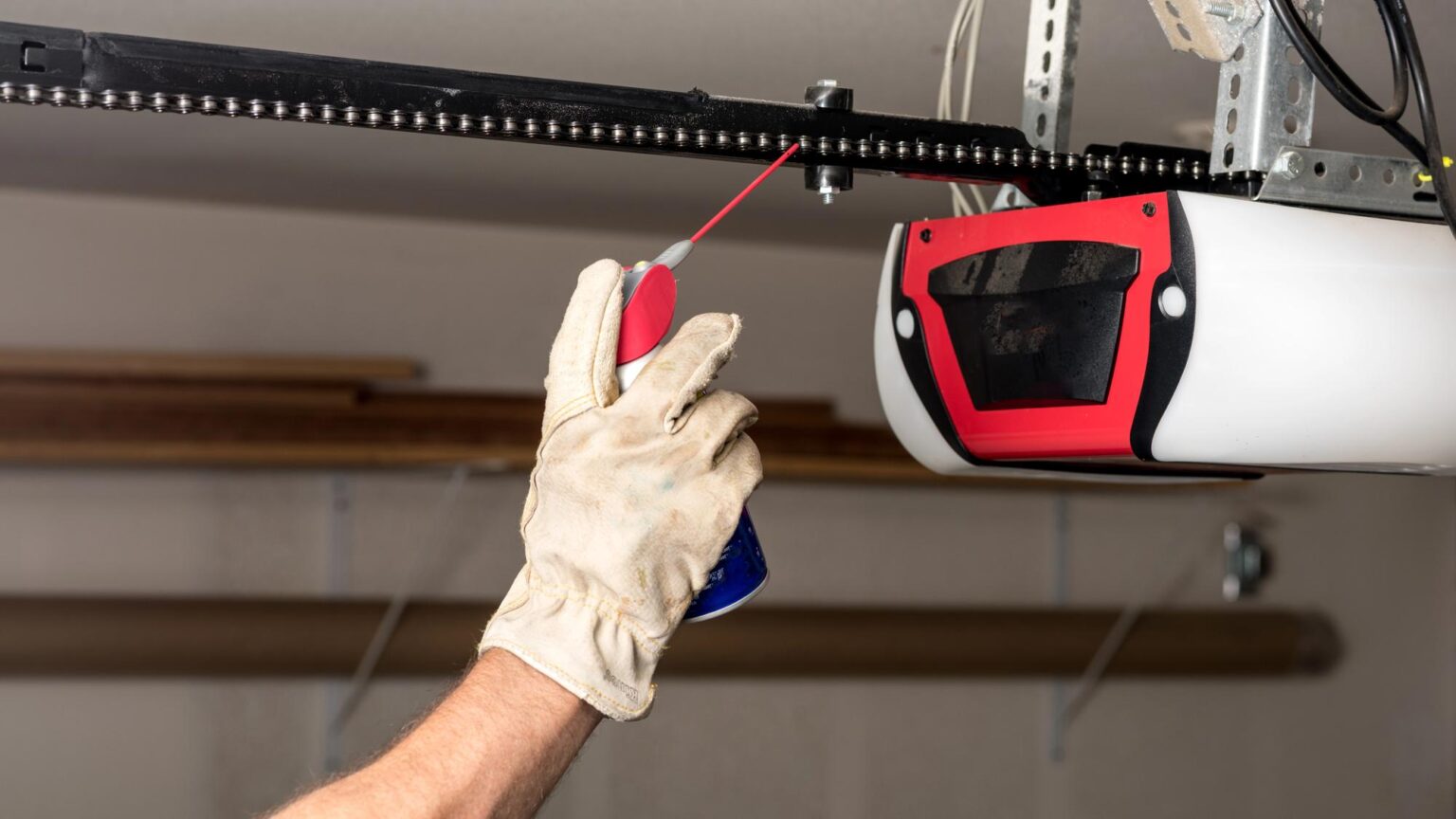
15. Lubricate the Moving Parts With a Proper Garage Door Lubricant
After winter, many moving parts benefit from fresh lubrication. Apply the right garage door lubricant to rollers, hinges, springs, and bearings as recommended.
This helps reduce friction, improve movement, and quiet down parts that may have dried out in cold weather.
16. Make Note of Any Problems That May Need Professional Repair
As you go through the checklist, keep track of anything that seems off. A worn seal, a noisy roller, rust on a spring, or an unbalanced door may not always need immediate replacement, but it is worth noting.
Catching those issues early makes it easier to schedule the right repair before the problem gets worse.
When to Call a Professional for Garage Door Winter-Related Problems
Some garage door issues are fine to watch, clean, or note during a seasonal inspection. Others are a clear sign that the door needs professional attention.
The tricky part is that a garage door can still open and close even when something important is starting to fail, which makes it easy to wait longer than you should.
Broken or Stretched Garage Door Spring
A broken or stretched spring is one of the clearest times to stop and call a professional. Springs carry a large amount of tension, and they do the heavy lifting every time the door opens and closes.
If one looks damaged, rusted, separated, or stretched out, it is not a DIY fix. Trying to adjust or replace a spring without the right tools and training can be dangerous.
Frayed Garage Door Cable
Garage door cables work closely with the springs to help lift and lower the door safely. If a cable looks frayed, loose, or worn, do not keep using the door like normal.
A damaged cable can snap under strain, and that can affect both the balance of the door and the safety of the whole system.
Garage Door off Track
If the garage door comes off track, even slightly, it needs professional repair. A door that is out of alignment can jam, drag, or move unevenly, and forcing it can make the damage worse. In some cases, it can also create a safety risk if the door shifts unexpectedly.
Garage Door Opener Strain
Sometimes the first sign of trouble is not the door itself, but the opener. If the opener sounds louder than usual, struggles to lift the door, or seems to be working harder than normal, something else in the system may be putting extra strain on it.
That could mean spring issues, balance problems, track resistance, or worn hardware.
Persistent Noise or Uneven Movement
A little noise here and there may just mean the door needs lubrication, but ongoing grinding, rattling, popping, or jerky movement is different.
If the door keeps sounding rough or moving unevenly after basic maintenance, it is a good time to bring in a technician. Those signs often point to wear that goes beyond a simple homeowner fix.
Garage Door Safety Sensor Problems
Safety sensors are too important to ignore. If the door is not reversing properly, the sensors are not responding, or the opener is acting inconsistently, that needs to be checked.
Safety features are there to protect people, pets, and property, so any issue with them should be treated seriously.
Keep Your Garage Door Working Smoothly With Raynor Door Authority
A post-winter garage door check can help you catch the kind of wear that is easy to miss when life gets busy. Cracked seals, rust spots, noisy movement, or a door that feels heavier than usual may seem small at first, but they are often the early signs of bigger repair needs. Taking a little time now can help you avoid more frustrating problems later.
Here’s what to do next:
- Walk through a simple post-winter inspection at home. Look over the panels, seals, tracks, rollers, springs, cables, and opener so you have a clear sense of how your door handled the winter.
- Make note of anything that feels off. Pay attention to gaps, rust, stiffness, unusual sounds, uneven movement, or any part of the door that no longer seems to be working as smoothly as it should.
- Contact Raynor Door Authority for a professional inspection or repair. Our trained and certified technicians can help with post-winter maintenance, repairs, and garage door inspections so your door stays safe, reliable, and ready for the season ahead.
If your garage door is showing signs of winter wear, reach out to Raynor Door Authority and get it checked before a small issue turns into a bigger repair.