


When Does Your Garage Door Track Require Repair?
Key takeaways
1. Garage door tracks are the rails that guide your door so it opens and closes smoothly.
2. Damaged or misaligned tracks get worse over time and can make a heavy garage door unsafe to operate.
3. Raynor Door Authority repairs and replaces damaged garage door tracks, so you don’t have to replace the whole door.
Signs that Your Garage Door Tracks Need Repair
Several signs indicate you are ready for a garage door track repair. They include:
- Noisy Open/Closure: Do you hear popping, whining, or vibrating noises when your garage door opens or closes? This could be a sign that your rails are wearing down or misaligned. Start by checking for blockages. If the rails are clear and continue making these noises, professional services may be necessary.
- Obvious Damage in the Tracks: Obvious signs of damage include dents, cracks, and bends. You may also notice that the tracks are no longer flat or parallel. These issues are likely to get worse over time and should be addressed immediately.
- Door Shakes/Stutters as It Moves: Damaged tracks can cause your door to shake and shutter as it moves. In some instances, shaking could be a sign of dirt or debris that can be easily cleaned. But in other cases, the tracks may dip and bend due to wear and tear. The unsteady operation could result in injuries. Call professional services right away.
- Misaligned Tracks: If your door is not opening or closing smoothly, the tracks may be misaligned. A lack of garage door alignment can be caused by loose hardware, worn-out rollers, or damaged rails. If tracks are slightly misaligned, you may be able to use a tool to bend them back in shape. A severe misalignment will require professional help.
- Uneven Open or Closure on Either Side: You may notice your door is not even when it opens and closes. This is a sign that your garage door may be off track. In these instances, refrain from attempting to fix the garage door track on your own. Since these are very heavy doors, only a trained professional should service this type of garage door track repair.

Superior Doors. Expert Service.
Your trusted garage door experts for residential and commercial properties. Premium products, expert installation, fast repairs, and dependable service that keeps your home secure.
Expert ServiceSince 1971
The Parts of a Garage Door Track System and How They Work
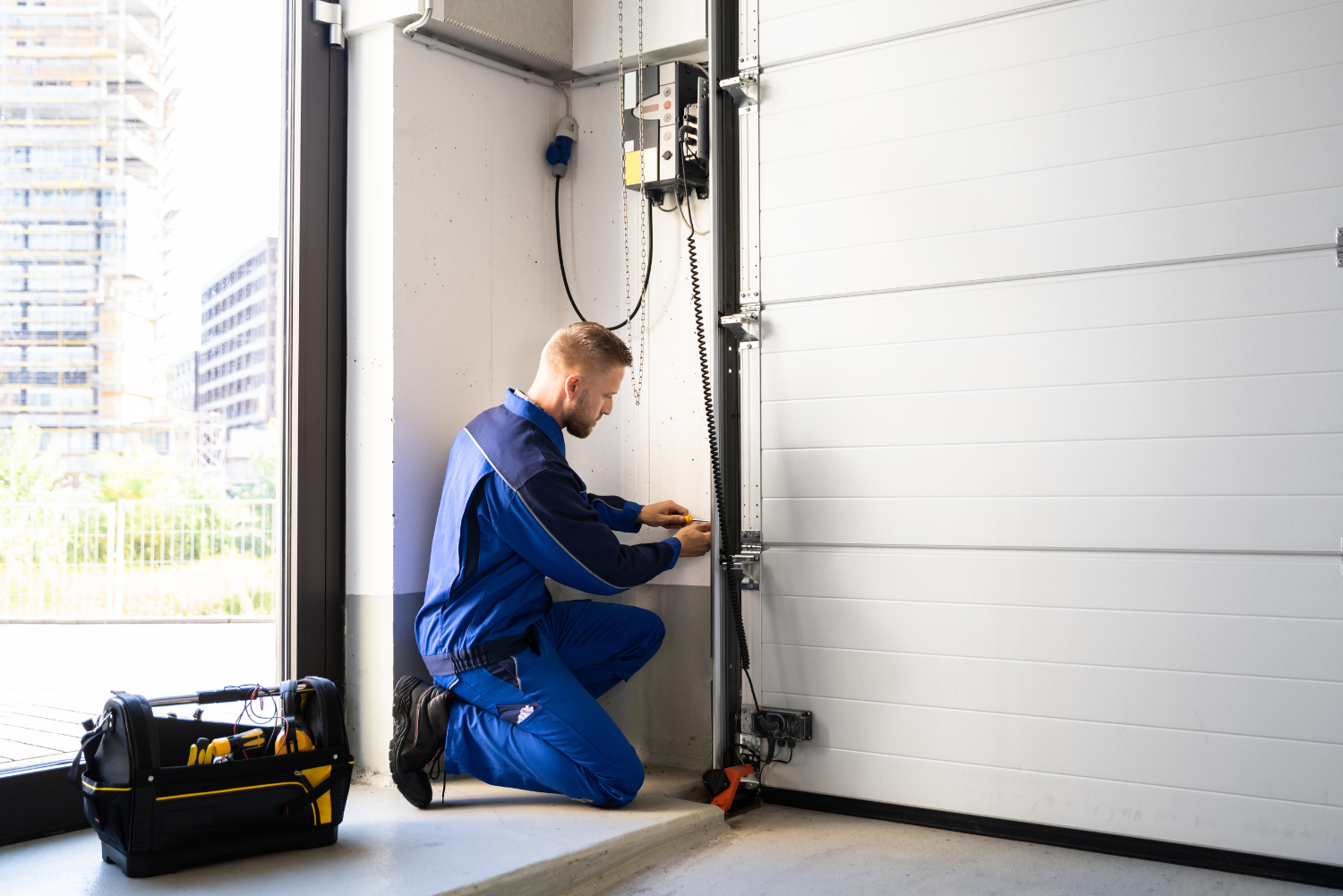
Your garage door rides on a pair of metal tracks, one on each side of the opening. Rollers attached to the edges of each door section sit inside these tracks and guide the door as it moves.
Each side has three main parts.
- Vertical track. Runs straight up the wall beside the door opening. It holds the door in place when it’s closed.
- Curved radius. Bends the path from vertical to horizontal as the door rises.
- Horizontal track. Runs along the ceiling and holds the door when it’s open. Hangers attached to the ceiling or framing support the back end.
Brackets bolt the tracks to the wall and ceiling. If any bracket loosens or any section bends, the rollers stop following a clean path, and that’s when you hear noise or feel the door shake.
Not every garage uses the same track layout. A standard lift is the most common setup in homes. A high lift extends the vertical track higher before it curves, which suits garages with tall ceilings or overhead storage. A low headroom setup uses a tighter track design for garages with little space above the door. Knowing which one you have helps a technician source the right replacement parts.
Common Causes of Garage Door Track Damage and Misalignment
Track problems rarely appear out of nowhere. Most trace back to one of these causes.
- Vehicle impact. Backing into a door, even lightly, can dent a vertical track or knock it out of line.
- Loose hardware. Everyday vibration from opening and closing slowly loosens the bolts on track brackets. Once a bracket shifts, the track follows.
- Worn rollers. Rollers with cracked wheels or worn bearings wobble inside the track and wear down its edges over time.
- Rust and corrosion. Moisture, humidity, and road salt tracked in on your car can rust the lower part of the tracks, where water collects.
- An unbalanced door. A broken spring or frayed cable makes one side of the door carry more weight than the other. The door twists as it moves and can jump off the track.
- An opener forcing the door. When the door binds, the opener keeps pushing, which can bend a track that was only slightly out of line.
Several of these, like loose bolts and worn rollers, are easy to catch early with regular checks.
Garage Door Track Maintenance Tips You Can Safely Do at Home
A few minutes of care each month keeps small track problems from turning into repair bills. Here’s what you can safely do yourself.
- Look it over. With the door closed, check both tracks for dents, bends, rust, and loose bolts.
- Clean the tracks. Wipe out dirt and debris with a damp cloth, then dry the tracks fully.
- Skip the grease in the tracks. Grease catches dirt and makes rollers slide instead of roll. Keep the tracks clean and dry.
- Lubricate the moving parts. Use a spray lubricant made for garage doors on the rollers’ bearings, the hinges, and the bearing plates.
- Tighten loose bolts. Snug up loose bolts on the track brackets with a socket wrench. Don’t overtighten them.
- Test the safety sensors. Close the door and pass an object through the sensor beam. The door should stop and reverse.
Some parts should never be touched without training. Leave the springs, the lift cables, and the bottom brackets where the cables attach to a professional. These parts are under high tension and can cause serious injury if loosened. Learn more about why garage door spring repair is too dangerous to DIY.
If your monthly check turns up a bent rail, rust you can’t wipe away, or bolts that keep working loose, it’s time for a closer look. Raynor Door Authority technicians can inspect the full track system, replace worn rollers and damaged sections, and check the springs and cables while they’re there.
Can Garage Door Tracks Be Replaced?
Garage door track issues do not necessarily mean a new garage door. A garage door track replacement is possible. It ensures you will only pay for the parts and labor of replacing the track instead of the entire door.
While garage door track replacement is a smaller job than full garage door replacement, it’s not the type of thing you want to DIY. Garage doors are heavy. They typically weigh around 400 pounds. If you injure yourself, it’s not worth the risk.
Additionally, DIY always poses a risk of the job being completed incorrectly. Incorrect installation could lead to additional maintenance and repair expenses down the road. It can also pose an ongoing safety risk.
Fix Bent or Misaligned Garage Door Tracks With Raynor Door Authority
Most track problems can be fixed without buying a new door, since a damaged rail can be realigned, repaired, or replaced on its own. Clearing debris is a fair job for a homeowner, but dents, bends, and a door that travels unevenly need a professional because of the weight involved.
Our technicians realign tracks that have shifted, tighten loose brackets, swap worn rollers, and replace a rail section only when it can’t be straightened. Every repair is done by our own employees, never subcontractors, so the person who inspects your tracks is the one accountable for the fix.
What You Should Do Next
- Look down both tracks. With the door closed, check each vertical and horizontal rail for dents, cracks, rust, or sections that no longer run parallel.
- Clear and listen. Wipe dirt and debris out of the tracks this week, then run the door and listen for popping or whining and watch for shaking.
- Schedule a track repair. Contact Raynor Door Authority if the noise continues, the door shakes, or one side sits lower than the other, and we’ll get it moving smoothly again.