


Winter Quietly Ruined Your Garage Door, Here’s How to Fix It
Key Takeaways
1. Winter damage usually starts with small gaps and worn seals, which quietly turn into drafts, moisture, and a garage that feels harder to keep comfortable.
2. The biggest winter fixes are simple: replace the bottom seal, add a threshold if water is pooling, and tighten side/top seals so the door closes evenly.
3. If your door is letting water in or sounds rough when moving, Raynor Door Authority can inspect, reseal, and tune the full system so it stays protected and runs in cold temperature.
Common Garage Door Issues Caused by a Bad Winter
Winter can make normal wear look like a bigger problem than it is, and it can also hide real damage until it turns into a breakdown.
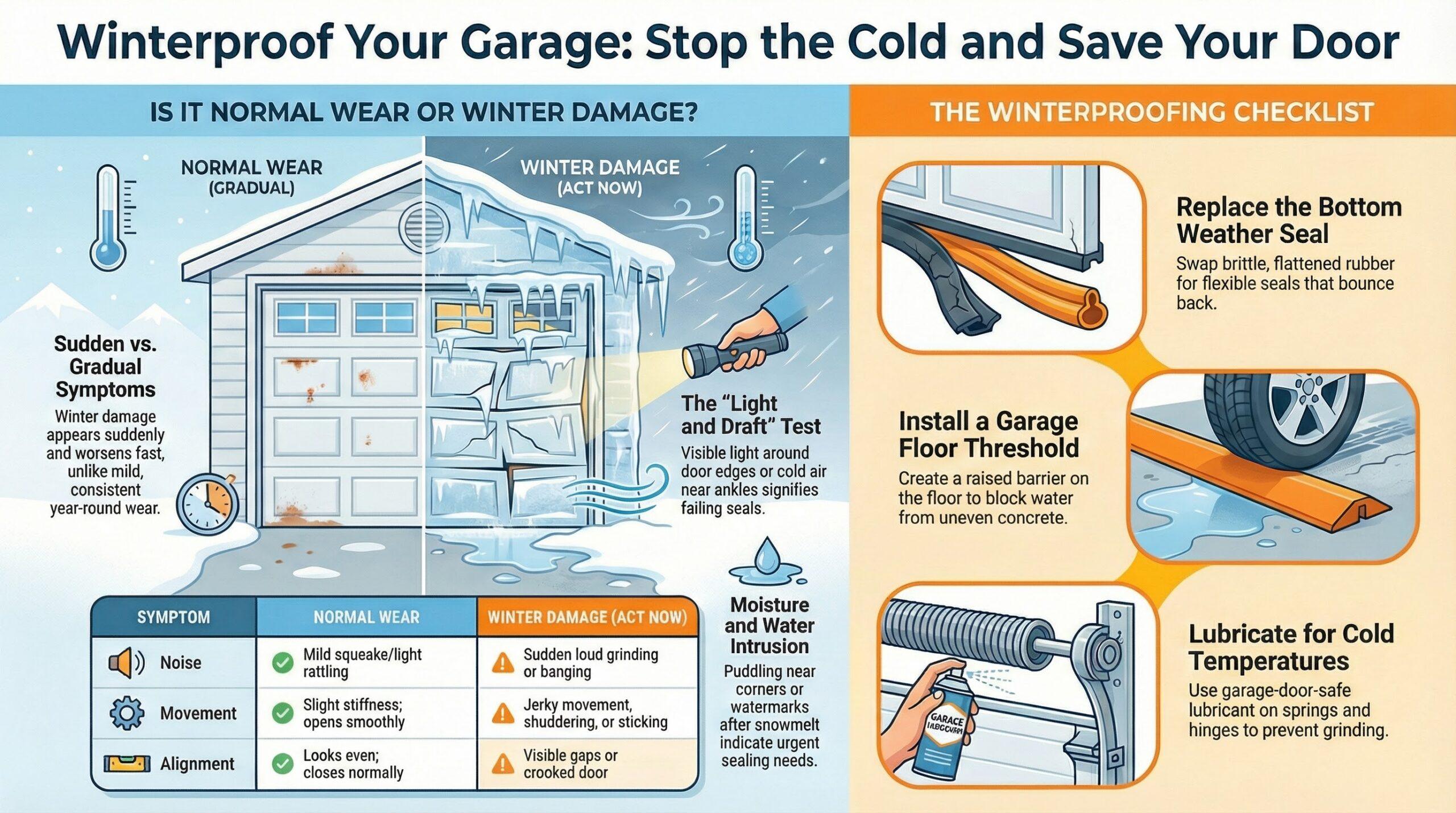
The easiest way to tell the difference is this: normal wear is usually mild and consistent, while winter damage shows up suddenly, worsens fast, or comes with moisture and sealing issues.
Quick comparison:
| What you notice | Normal wear (usually expected) | Winter damage (usually needs attention) |
|---|---|---|
| Noise | Mild squeaks or light rattling that stays the same | Sudden loud grinding, banging, or vibrating that keeps getting worse |
| Door movement | Slight stiffness, but the door still opens/closes smoothly | Jerky movement, sticking, shuddering, or struggling to close evenly |
| Sealing & drafts | Small airflow that doesn’t change much | New drafts, visible light at the edges, or cold air rushing in |
| Water intrusion | Dry floor near the door with occasional minor dampness | Water marks, puddling near corners, and moisture after snow melt or wind-driven rain |
| Rust & corrosion | Light surface rust on older hardware | Rust spreading quickly, stiff rollers/hinges, or rough “dragging” sounds |
| Door alignment | Looks even, closes normally | Gaps on one side, the door looks crooked, and needs extra force to shut |
| Opener behavior | Works normally with occasional hesitation | Door reverses, strains, or sounds like it’s working too hard |
| Consistency | Same symptoms day to day | Changes based on temperature swings, worse in extreme cold or after storms |
How to Fix Garage Door Winter Damage
Winter usually doesn’t break a garage door overnight. It slowly wears down the seals, loosens hardware, and turns tiny gaps into real drafts and moisture problems.
Fixing the problem involves identifying the source and applying appropriate solutions. Below, we list some of the easiest fixes you can apply.
1. Start With the Real Problem: Gaps Around the Door Perimeter
When a garage feels noticeably colder in winter, the cause is often basic: the door is leaking air around the edges. Small gaps along the sides, top, or bottom are enough to let cold wind in and push warm air out. Over time, that steady draft makes the entire space feel harder to tolerate, even if the rest of the home is comfortable. Weatherstripping is your garage door’s first line of defense against winter air.
Those same openings are where moisture enters. Snow melt, wind-driven rain, and damp winter air tend to creep in through the corners first, which is why you’ll often see early water staining or a damp patch near the bottom of the opening.
What to watch for:
- Light is visible along the edges when the door is shut
- Watermarks or dampness near the bottom corners
- Drafts you can feel when you stand close to the door
Inspecting for existing gaps and damage helps prioritize fixes for your garage door.
2. Replace Worn or Flattened Bottom Weather Seal
If the perimeter gaps are the main leak points, the bottom weather seal is usually the worst offender. This seal is typically made of rubber, which scrapes the floor every single day, takes the hit from road salt, grit, and moisture, and then gets compressed for hours at a time when the door stays shut overnight.
In winter, rubber weatherstripping can become brittle and cracked, leading to drafts and even potential freezing of internal components.
After a while, it stops doing its job. It hardens, cracks, or flattens out so much that air and water can slip right underneath. This becomes even more noticeable if your driveway slopes slightly or has small dips.
A bottom seal that’s still in good shape should press down and bounce back. When it loses that flexibility, it turns into a thin strip that barely touches the ground, and winter air finds the easiest path in.
Signs it’s time to replace it:
- A draft you feel near your ankles when you stand close to the door
- Water creeping in during heavy rain, snow melt, or windy weather
- A seal that looks cracked, brittle, or permanently flattened
- Visible gaps at the corners or along the center of the door
Replacing or installing new weatherstripping can help prevent drafts and moisture from entering the garage, keeping your space warmer and protecting internal components from freezing.
3. Add a Garage Door Threshold for Better Floor-Level Sealing
Even with a new bottom seal, some garages still take on water at the “door line.” That’s usually because the floor isn’t perfectly flat. A slight slope, a shallow dip in the concrete, or a low spot near the corners is enough for snow melt to creep in and spread.
A garage door threshold seal is a simple upgrade that provides an extra layer of protection. Instead of relying only on the door’s bottom seal to block everything, the threshold creates a raised barrier on the floor itself, so water has a harder time crossing into the garage.
4. Check Side and Top Seals for Loose Sections
Side and top seals are easy to forget because they’re “up there,” but they matter a lot in winter. When the trim seal loosens or pulls away, cold air rushes in through that opening fast. You’ll often feel it as a draft even when the door looks shut, because the seal isn’t making contact the way it should.
5. Reduce Door Rattle and Cold-Air Leaks From Worn Hardware
If your door shakes, rattles, or sounds rough in winter, it’s not only noise. Loose rollers, worn hinges, and tired hardware can cause the door to fail to sit tight against the weatherstripping. That tiny lack of pressure is enough to bring the drafts back, even if the seals are technically in place.
A repair tech may recommend:
- Replacing worn rollers so the door runs more smoothly and stays stable
- Adjusting or upgrading hinges so the door closes more tightly against the seals
- Adding dampeners/sleeves to cut vibration and metal-on-metal rattle
When to Call a Professional for Winter Garage Door Issues
Winter puts extra stress on garage doors, and some sounds or behaviors are normal cold-weather quirks. The question is whether you’re dealing with a safety risk that needs immediate attention or an early warning sign you can monitor for a few weeks.
Call for immediate service if:
- Water or snow is entering the garage: seals are failing
- The door won’t close flush: you see light gaps or feel cold air along the bottom or sides
- Movement is erratic: jerking, scraping, uneven closing, or stopping mid-cycle
- Loud popping or snapping sounds: especially near springs or cables
- The door slams shut, feels unusually heavy, or won’t stay open: spring tension issues
- The opener strains, reverses without cause, or won’t engage
These issues mean the door is either damaging itself with every cycle or creating a safety hazard. Raynor Door Authority handles emergency repairs 24/7, including spring replacement, track realignment, roller and hinge repair, opener troubleshooting, and weatherstripping.
Safe to monitor short-term:
- Light squeaking or soft rattling that’s consistent
- Slight stiffness in cold temps, but smooth operation overall
- Minor vibration that doesn’t affect sealing
- Worn weatherstripping that isn’t letting water in yet
If these symptoms stay mild and consistent, you can watch them through the next cold snap. But if they worsen week over week, schedule a tune-up before they escalate into costlier repairs.
Fix Winter Garage Door Damage With Raynor Door Authority
A few gaps around the perimeter or loose hardware are enough to invite drafts, moisture, and extra strain. The smartest fix is to tighten the seal, stabilize the door, and stop water at the floor line before it becomes a bigger repair.
Weatherproofing your garage door is one of the most effective ways to avoid winter freeze-ups and improve overall energy efficiency, especially in extreme temperatures.
Next steps to take:
- Do a quick perimeter check for light at the edges, drafts near the floor, or damp corners after snow melt.
- Lubricate the springs, hinges, rollers, and other moving parts to help keep your garage door working through the winter months.
- Pay attention to movement and sound. If the door jerks, scrapes, or starts struggling, don’t keep running it.
- Call Raynor Door Authority to inspect, reseal, and tune the door so it closes evenly, stays protected, and runs even after winter.
Adding thermal protection can significantly improve energy efficiency and comfort. Need help fast? Contact Raynor Door Authority today for service and 24/7 emergency repairs.