


The Importance of Lubricating Your Garage Door
Key Takeaways
1. Garage door lubrication coats the hinges, rollers, and lock with a silicone-based spray to cut friction between moving parts.
2. Lubricating at least twice a year prevents the squeaking, sticking, rust, and wear that shorten a door’s life.
3. Raynor Door Authority’s planned maintenance service includes spring lubrication, which homeowners should leave to a trained technician.
Why Lubricating a Garage Door Matters
Your garage door is a complex system of moving parts, including rollers, hinges, springs, and tracks. These components are constantly subjected to friction as they move back and forth. Over time, this friction can lead to wear and tear, causing squeaking, sticking, and other performance issues.
Lubrication helps to reduce friction and minimize wear and tear. It also protects metal parts from rust and corrosion, which can weaken them and compromise the overall integrity of your garage door. By lubricating your garage door regularly, you can enjoy a smoother, quieter, and more reliable operation.
When To Lubricate a Garage Door
Most homeowners should lubricate their garage door at least twice a year. An easy way to remember is to tie it to the seasons. Lubricate in the spring and again in the fall, so the door is protected before summer heat and humidity, and again before cold weather sets in. Cold makes old lubricant thicken, which is why doors often get louder and stiffer in winter.
Some doors need attention more often. Lubricate every three months if any of these apply to you.
- The garage is your main entrance. A door that opens and closes several times a day wears its hinges and rollers faster than one used only on weekends.
- You live near the coast or in a humid climate. Salt air and moisture speed up rust on metal parts.
- Your driveway gets road salt in winter. Salt and slush carried in on your car can corrode the lower hinges and rollers.
Between scheduled treatments, your door will tell you when it needs lubricant. Squeaking, grinding, or a jerky, uneven motion are the most common signs. If the noise comes back within a few weeks of lubricating, a part is likely worn, and more lubricant won’t fix it.

Your Trusted Garage Door Experts 50+ Years
Whether you need residential or commercial installation or are looking for garage door services, we’re here to make you ridiculously happy.
Choosing the Right Lubricant for Garage Doors
The best choice for most garage doors is a silicone-based spray labeled for garage doors. Silicone repels water, which protects metal parts from rust, and it doesn’t leave a sticky film that traps dust.
It also stays effective in cold weather, so the door won’t stiffen up in winter. Look for a spray with a straw nozzle, which lets you reach hinge pins and roller bearings without overspraying.
White lithium grease is another option for metal hinges and roller bearings. It’s thicker than silicone and lasts longer, but it attracts more dirt, so apply it sparingly and wipe off the excess.
Avoid these products.
- Standard WD-40. The original blue-and-yellow can is a cleaner and water displacer, not a long-lasting lubricant. It wears off quickly and leaves a residue that collects dirt. The same brand makes silicone and white lithium sprays under its Specialist line, and those work well.
- Motor oil or household oil. These are too thin to stay in place and drip onto the floor, the door, and your car.
- Heavy grease on the tracks. Thick grease turns the tracks into a dirt trap and makes the rollers slide instead of roll.
Before you buy, read the label. If it says silicone or white lithium and lists garage doors or hinges as a use, you have the right product.
How to Lubricate a Garage Door
Lubricating your garage door is a relatively simple task that you can do yourself. Here’s a step-by-step guide:
- Prepare your garage door: Ensure that the door is fully closed and disconnected from the power source. This can usually be done by pulling the emergency release cord.
- Clean the tracks: Use a soft brush or cloth to remove any dirt, dust, or debris from the tracks. You can also use a vacuum cleaner with a brush attachment.
- Apply the lubricant: Spray a small amount of silicone-based lubricant onto a clean cloth or directly onto the moving parts.
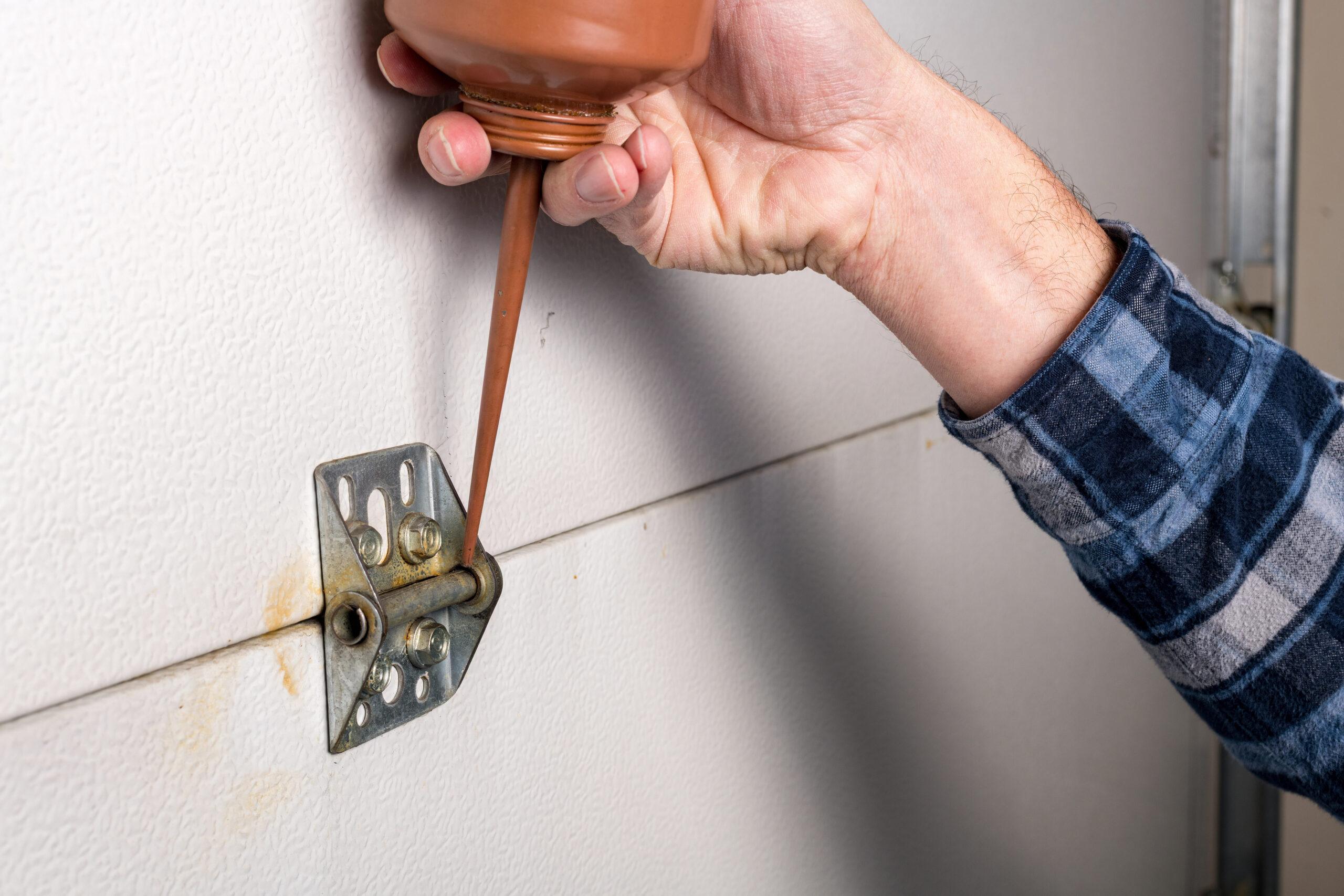
- Lubricate the hinges: Apply lubricant to each hinge pin, working the lubricant in with a cloth.
- Lubricate the rollers: Apply lubricant to the roller bearings, moving the door up and down to distribute the lubricant evenly.
- Lubricate the springs: Caution: Garage door springs are under extreme tension and can be dangerous if handled incorrectly. It’s best to leave the lubrication of springs to a professional garage door technician.
- Lubricate the lock: Apply a small amount of lubricant to the lock mechanism to ensure smooth operation.
- Wipe away excess lubricant: Use a clean cloth to wipe away any excess lubricant.
By following these simple maintenance tips, you can significantly extend the life of your garage door and keep it operating smoothly for years to come. Remember, a well-maintained garage door is not only a functional component of your home but also a valuable asset that can enhance your property’s overall value.
Garage door parts you should never lubricate and why
Knowing what to skip matters as much as knowing what to spray. Too much lubricant in the wrong place collects dirt and can make your garage door run worse than before.
- Tracks. Keep the tracks clean and dry. Lubricant on the tracks traps dust and grit, and it can cause the rollers to slide instead of roll, which wears them unevenly. If the tracks look dirty, wipe them with a damp cloth and let them dry.
- Nylon roller wheels. Nylon rollers don’t need lubricant on the wheel itself. If your rollers have exposed metal bearings, apply a small amount to the bearings only. Sealed-bearing nylon rollers need nothing at all.
- Opener belts. A belt-drive opener is designed to run without lubricant. Spraying the belt can cause it to slip and break down faster. Chain-drive openers are different, so check your opener’s manual for its specific instructions.
- Safety sensor lenses. Keep spray away from the small sensors near the bottom of the door tracks. A film on the lens can block the beam, and the door may refuse to close or fail to reverse when something is in its path.
- Rubber weatherstripping and plastic parts. Petroleum-based products can dry out and crack rubber seals and weaken plastic parts. If you must treat the bottom seal, use only a silicone-based product.
When in doubt, apply less. A light coat on the right parts does more good than a heavy coat everywhere.
Stop the Squeak Before It Wears Parts Down With Raynor Door Authority
Spray the hinges, rollers, and lock with a silicone lubricant at least twice a year, and again whenever the door starts to squeak or stick. Clean the tracks rather than coating them, and leave the springs to a technician.
Our in-house technicians lubricate the springs during a planned maintenance visit and check the cables, rollers, and weatherstripping while they’re there. When lubricant can’t quiet a part, we replace just that roller, hinge, or cable before we ever suggest a new spring or opener.
What You Should Do Next
- Find the noisy spots. Run the door through a full cycle and note which hinges or rollers squeak, grind, or catch at each panel joint.
- Clean and lubricate this weekend. Unplug the opener, brush out the tracks, spray the hinge pins, roller bearings, and lock, then cycle the door to see if the noise stops.
- Book a maintenance visit. Contact Raynor Door Authority if the door still sticks after lubrication or if you spot frayed cables or worn weatherstripping, and we’ll get it running smoothly again.
FAQs