


Signs of Wear in Garage Door Springs and When to Replace Them
Key Takeaways
1. Worn or broken garage door springs can cause heavy lifting, uneven movement, or sudden door failure, posing safety risks and damaging other components.
2. Regular maintenance, like lubrication, balance testing, and visual inspection, helps extend spring life and catch issues early.
3. Raynor Door Authority offers expert spring replacement services to restore safe, smooth garage door operation and prevent costly breakdowns.
Signs That Your Garage Door Springs Need Replacement
Garage door springs are responsible for counterbalancing the weight of your door, making it easy to open and close. When these springs fail or weaken, they can compromise both performance and safety. Knowing the warning signs helps you act before a minor issue turns into a serious hazard.
1. Door Feels Heavy or Hard to Lift
If your garage door suddenly feels unusually heavy or difficult to lift, even with the opener, the springs may no longer be doing their job. Springs are designed to carry most of the door’s weight. When they weaken or break, that weight shifts entirely to the opener or to your manual effort.
What this means: The garage door springs have lost tension or one has already failed. Continuing to use the door puts excessive strain on the opener and increases the risk of sudden failure.
2. Door Does Not Stay Open
Your garage door should remain fully open without assistance. If it begins to slide down or will not stay up at all, that is a strong indication that your springs have lost tension or failed.
What this means: The counterbalance system is no longer holding. A door that drops unexpectedly is a serious crush hazard, especially for children, pets, or anyone walking underneath.
3. Visible Gaps in the Spring
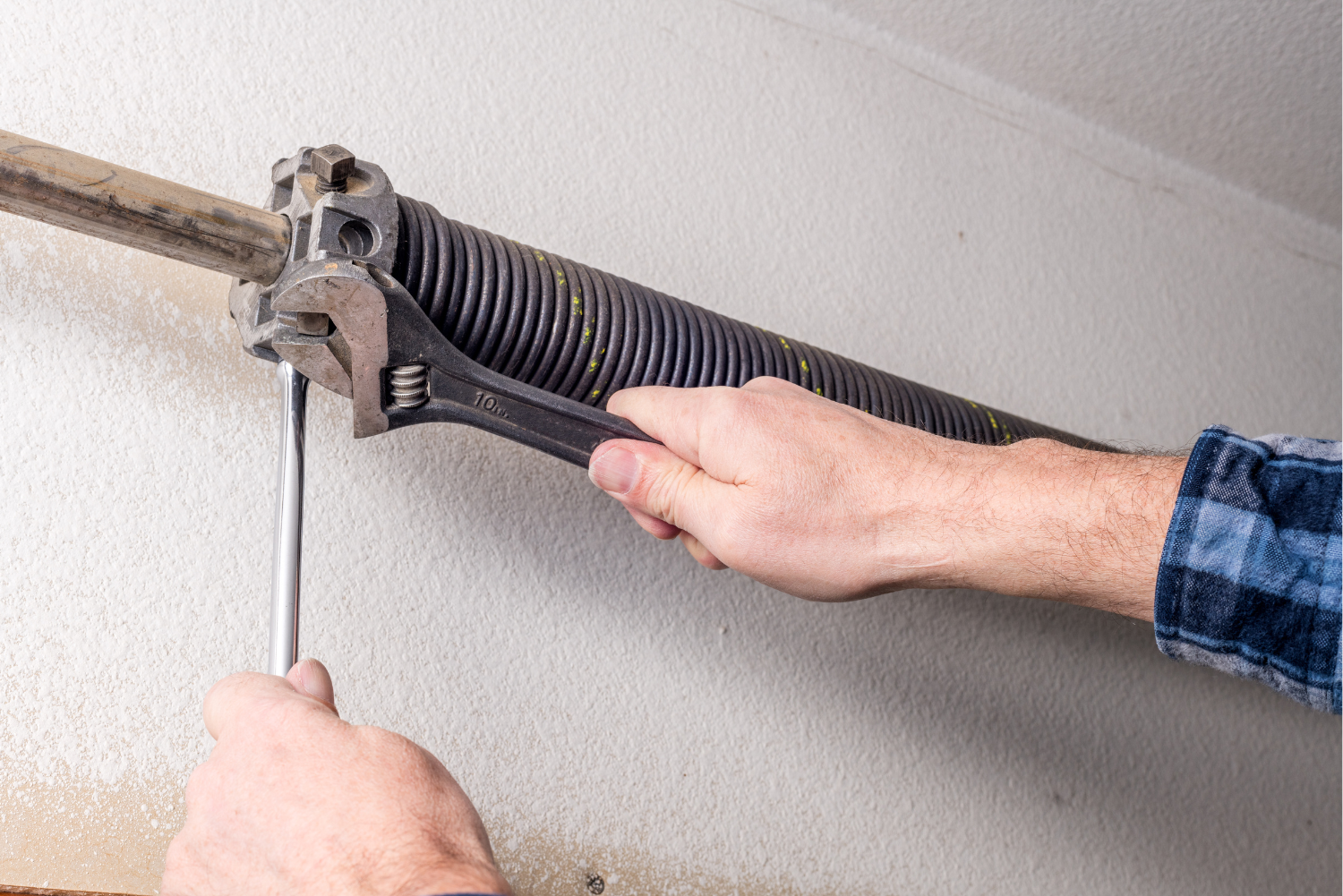
Torsion springs are tightly wound coils. If you notice a gap of about 2 inches or more in the spring, that means it has snapped. Extension springs may not show a gap, but could be visibly overstretched or hanging loosely.
What this means: The spring is broken. Do not use the door. Do not attempt to open it manually or with the opener. Call for service immediately.
4. Loud Bang From the Garage
When a torsion spring breaks, it releases a significant amount of stored tension all at once. This can create a loud noise that sounds like a gunshot, a car backfiring, or something heavy falling.
What this means: If you hear this sound and your door stops working properly afterward, a broken spring is almost certainly the cause. Stop using the door and inspect for visible damage before calling a technician.
5. Uneven Door Movement
A balanced door should move up and down smoothly. If it looks crooked while moving, rises unevenly, or gets stuck partway, one of the springs may be weaker or broken. This uneven tension forces other components to compensate.
What this means: Continued use can damage tracks, rollers, cables, and the opener. The door may also jump off track entirely, creating a larger and more expensive repair.
6. The Opener Struggles or Stops Mid-Cycle
Garage door openers are not designed to lift a door’s full weight. If the opener strains, makes unusual noises, or stops before the door is fully opened or closed, your springs may not be providing enough support.
What this means: The opener is working harder than it should. Continued use can burn out the motor, strip gears, or cause the door to drop unexpectedly when the opener gives out.
7. Springs Look Rusty or Stretched
Over time, springs corrode due to moisture or show visible signs of wear like rust, discoloration, or elongation. A rusty spring is more brittle and prone to snapping. A stretched spring has lost the tight tension needed for proper function.
What this means: Failure is likely soon. Schedule an inspection before the garage door spring breaks, and turns a planned repair into an emergency.
How Long Do Garage Door Springs Last?
The springs are rated by cycles, not years. One cycle equals one full open and close. A standard spring is rated for around 10,000 cycles, which translates to roughly 7 to 10 years for a household that uses the garage door 2 to 4 times per day. High-cycle springs (25,000 to 50,000 cycles) last longer but cost more upfront.
If your springs are approaching or past this range, inspect them regularly and plan for replacement before failure forces the issue.
Two Types of Springs
- Torsion springs mount horizontally above the door on a metal shaft. They twist to store energy and release it to lift the door. These are more common in modern installations, safer, and longer-lasting.
- Extension springs run along the horizontal tracks on both sides of the door. They stretch to store energy. These are older technologies, typically found on lighter doors or older homes. They should have safety cables running through them to prevent whipping if they snap.
Knowing which type you have helps you identify problems and communicate clearly with a technician.
Proper Maintenance of Garage Door Springs
Maintaining your garage door springs is key to ensuring safe operation, extending their lifespan, and avoiding sudden, costly breakdowns. Springs are under constant tension and wear down over time, but regular care helps keep them functioning properly.
1. Lubricate the Springs Regularly
Apply a silicone-based or lithium-based garage door lubricant to the coils every 3 to 6 months. This reduces friction, prevents rust, and keeps the springs moving smoothly. Avoid using grease or WD-40, which can attract dust and cause build-up.
2. Inspect for Wear and Tear
Visually inspect your torsion or extension springs monthly. Look for signs of rust, gaps in the coils, fraying cables, or any stretching or sagging. Catching wear early helps prevent sudden spring failure.
3. Test the Door Balance
Disconnect the opener and manually lift the garage door halfway. If the springs are in good condition, the door should stay in place. If it falls or rises quickly, the springs may need adjustment or replacement.
4. Check for Unusual Noises
Grinding, squeaking, or popping sounds can indicate a problem. While some noise is normal, sudden loud noises may mean the spring is misaligned, dry, or close to breaking.
5. Avoid DIY Adjustments
Garage door springs are under high tension and can be dangerous to adjust without proper tools and training. Leave any tightening, loosening, or replacement to trained professionals.
6. Keep the Area Clean
Dust and debris buildup can affect spring performance. Gently wipe around the springs and surrounding hardware during seasonal garage maintenance to keep everything running smoothly.
What Not to Do When You Suspect Spring Failure
When a garage door spring starts to fail, instinct kicks in. You want to fix it, force it, or at least get through one more day. But every common reaction makes things worse.
Do not continue using the door.
- Every cycle adds stress to a system already compromised
- Forces the opener to work harder and accelerates wear on cables and rollers
- A door that “still works” today can snap tomorrow with no warning
Do not try to manually lift a door with a broken spring.
- You are lifting 150 to 400 pounds with no mechanical assistance
- Even if you lift it, you cannot hold it
- The door can slip, fall, or crush whatever is underneath
Do not pull the emergency release if the door is open or partially open.
- The release disconnects the door from the opener
- If the springs are broken, nothing is holding the door up
- The full weight drops instantly
- One of the most common causes of garage door injuries
Do not attempt to adjust, remove, or replace springs yourself.
- Torsion springs store enough energy to lift hundreds of pounds
- That energy releases violently if mishandled
- Improper handling can cause serious injury or death
- This is not a DIY repair under any circumstances
Do not prop the door open with ladders, chairs, or other objects.
- Improvised supports are not rated for garage door weight
- They can slip, buckle, or collapse without warning
- A falling door can cause catastrophic injury
Do not ignore the warning signs and “wait it out.”
- Squeaking, heavy doors, and straining openers are warnings, not minor inconveniences
- Waiting until full failure often causes additional damage to cables, tracks, and the opener
- A single spring replacement becomes a full system repair
If you are unsure whether something is safe to do, the answer is do not do it. Call Raynor Door Authority and let a trained technician handle it.
Restore Safe, Smooth Garage Door Operation Before a Spring Fails
Worn garage door springs quietly put your safety, your opener, and your entire door system at risk, and the warning signs often show up well before a full failure. Heavy lifting, uneven movement, loud noises, and visible wear are signals that the counterbalance system is no longer doing its job and needs professional attention.
At Raynor Door Authority, we replace failing springs before they cause injuries or expensive secondary damage. Our technicians inspect the entire system, install properly rated springs, and restore smooth, balanced operation, so your door works the way it should, safely and reliably.
Next steps
- Look for signs of wear, like a heavy door, uneven movement, loud bangs, or visible gaps or rust in the springs.
- Stop using the door if anything feels unsafe or abnormal, and avoid DIY adjustments that can cause serious injury.
- Schedule a professional spring inspection and replacement with Raynor Door Authority.
Do not wait for a sudden failure to force an emergency repair. Contact Raynor Door Authority today and protect your garage, your home, and everyone who uses that door.