


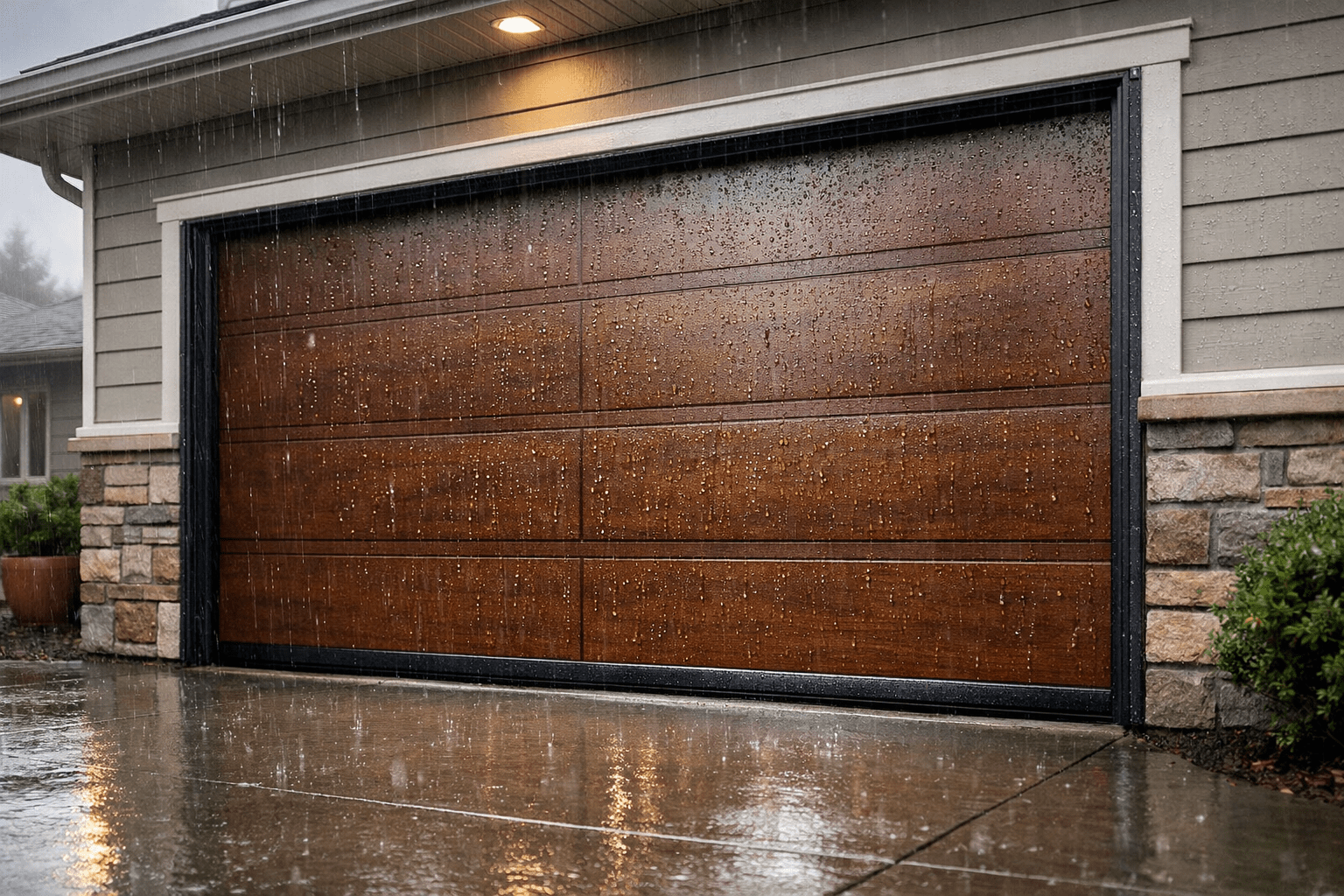
How to Protect Your Garage Door in Wet Climates
Key Takeaways
1. Moisture that seeps into the garage doors through seams or joints causes rust, warping, and corrosion.
2. Applying weatherstripping, seals, and proper drainage to your doors can protect them from future expensive repairs.
3. Raynor Door Authority offers regular maintenance that catches moisture damage early and keeps your door reliable long-term.
How Moisture Breaks Down Your Garage Door Over Time
Water doesn’t just sit on the surface of your garage door and evaporate. It works its way into seams, joints, and small scratches in the finish. Once it gets in, it starts breaking down materials from the inside out.
Steel doors develop rust. Wood doors absorb moisture and begin to swell, warp, or rot. Even aluminum, which people assume is waterproof, can corrode over time when exposed to salt air or acidic rainwater.
The mechanical parts of your door system are just as vulnerable. Springs, hinges, tracks, and rollers are all metal components that sit in a damp environment every time it rains. When these parts corrode, your door gets harder to open, noisier, and eventually stops working correctly.
Humidity inside the garage makes things worse. If your garage doesn’t have good airflow, moisture gets trapped. That creates a breeding ground for mold on walls, stored items, and the interior side of the door itself.
Early Warning Signs That Water Is Damaging Your Door
Catching moisture damage early saves money. A small rust spot or a cracked seal is a quick fix. A rotted panel or a seized spring is not.
Here’s what to look for:
- Rust spots or bubbling paint on steel doors. This means water has gotten beneath the finish and is eating into the metal. Even small spots spread fast in wet conditions.
- Swelling or soft spots on wood doors. Press along the bottom panels and edges. If the wood feels soft or spongy, moisture has already soaked in.
- White powdery residue on aluminum doors. This is oxidation – aluminum’s version of rust. It weakens the metal over time.
- Stiff or squeaky operation. If your door suddenly feels heavier or makes grinding noises, corroded tracks or springs could be the cause.
- Water stains on the garage floor near the door. This means your bottom seal isn’t doing its job and water is getting underneath.
- Peeling or flaking paint. Paint is your door’s first line of defense. When it starts failing, the material underneath is exposed.
Check your door twice a year at a minimum. Once before the wet season and once after. A five-minute inspection can catch problems while they’re still small.
Why Weatherstripping and Seals Matter More Than You Think
The rubber seal along the bottom of your garage door and the weatherstripping around the sides and top are designed to keep water out. They’re also the first things to wear out.
Bottom seals take the most abuse. They compress every time the door closes and sit directly in the path of rainwater runoff. Most last three to five years before they crack, flatten, or tear.
Replacing a bottom seal is one of the cheapest and easiest upgrades you can make. Most homeowners can do it themselves with a replacement seal from a hardware store. If you’re not comfortable doing it yourself, a technician can handle it during a routine maintenance visit.
Side and top weatherstripping matters too. These pieces fill the gaps between the door and the frame. When they shrink or pull away – which happens naturally over time – rain and wind-driven water get inside.
A few tips for keeping seals effective:
- Clean them twice a year with mild soap and water to prevent cracking
- Apply a silicone-based lubricant to keep rubber flexible
- Replace any seal that’s visibly cracked, compressed flat, or pulling away from the frame
- Make sure the door closes evenly on all sides – if one corner lifts, water gets in there
Need new weatherstripping or a bottom seal replacement? Contact your local Raynor Door Authority team to get it handled quickly.
How to Fix Drainage Problems Around Your Garage
Your garage door can have perfect seals and a flawless finish, but if water pools around the base of your garage, you’ll still have problems. Poor drainage is one of the most overlooked causes of garage door damage.
Water that collects near the threshold saturates the bottom seal, seeps under the door, and sits against the lowest panels for hours or days at a time.
Water Flowing Toward the Garage Opening
The ground around your garage should slope away from the door – not toward it. If rainwater runs downhill into your garage opening, it’s sitting against the bottom panels and seal every time it rains.
A contractor can regrade the driveway apron to direct water away from the threshold. For a less invasive fix, installing a channel drain or trench drain directly in front of the garage opening catches water before it reaches the door. A garage door technician can also assess whether your bottom seal and threshold seal are rated for the amount of water exposure your door is getting.
Gutters and Downspouts Dumping Water Near the Foundation
If your gutters overflow or your downspouts empty right next to the garage, all that roof runoff ends up at your door. Over time, this concentrated water flow erodes the ground near the foundation and increases moisture exposure on the lower panels.
Extend downspouts at least four to six feet away from the foundation using downspout extensions or underground drain lines. A gutter professional can also install larger-capacity gutters or add additional downspouts if your current system can’t handle the volume during heavy rain.
Condensation Building Up Inside the Garage
If your garage has no ventilation, moisture builds up on cool surfaces, including the inside of your door, springs, tracks, and rollers. This interior moisture causes just as much corrosion as rain on the outside.
A ventilation specialist can install an exhaust fan or passive vents to keep air circulating. For garages with persistent humidity problems, a small dehumidifier makes a noticeable difference. During a maintenance visit, a Raynor Door Authority technician can identify whether interior condensation is affecting your door’s hardware and recommend the right solution for your setup.
Protecting Steel, Wood, and Aluminum Doors in Wet Weather
Steel Doors
Steel is the most common garage door material, and it holds up well in wet climates – as long as the finish stays intact.
The factory paint or powder coating on a steel door is its primary moisture barrier. When that finish gets scratched, chipped, or worn, the exposed steel starts rusting fast.
Inspect your steel door’s finish every spring. Touch up any chips or scratches with a rust-inhibiting primer and exterior paint that matches your door’s color. For minor surface rust, sand it down to bare metal, apply primer, and repaint.
Washing your steel door two to three times a year with mild soap removes dirt and salt that accelerate corrosion. This is especially important if you live near the coast or in an area where roads are salted during winter.
Wood Doors
Wood garage doors look great, but require the most maintenance in wet climates. Wood is naturally porous, so it absorbs moisture unless it’s properly sealed.
A quality exterior stain or paint is essential. Reapply every two to three years – or sooner if you notice the finish wearing thin. Pay special attention to the bottom edge of the door, where water contact is heaviest.
The end grain of wood panels absorbs moisture fastest. Sealing these edges with a waterproof wood sealant gives you extra protection in the areas that need it most.
If you live in a high-humidity area and you’re choosing a new door, consider a composite material that looks like wood but resists moisture. You get the appearance without the constant upkeep.
Aluminum Doors
Aluminum doesn’t rust, but it does corrode. Salt air in coastal areas is the biggest threat, but even inland, acidic rain can cause pitting over time.
Wash aluminum doors regularly to remove corrosive deposits. A coat of automotive wax twice a year creates a barrier that slows oxidation and keeps the door looking clean.
Check for any dents or scratches in the finish. Like steel doors, aluminum doors rely on their surface coating for protection. Damaged areas should be sealed to prevent moisture from reaching the raw metal.
When DIY Isn’t Enough, and You Need a Professional
Some moisture related garage door problems are easy to handle on your own. Replacing a bottom seal, touching up paint, or adjusting drainage are all manageable DIY projects.
Other issues need a trained technician. If your springs are corroding, your tracks are rusting, or your door panels show structural damage from moisture, those repairs involve parts under high tension and require specialized tools.
Signs it’s time to call a pro
- The door is hard to open or close and getting worse
- Springs look rusty, stretched, or are making unusual noises
- Panels are warped, cracked, or visibly rotting
- The door won’t seal properly even after replacing the weatherstripping
- You notice rust on internal hardware like hinges, rollers, or brackets
Raynor Door Authority’s technicians inspect seals, lubricate moving parts, check spring tension, and catch early moisture damage before it turns into an expensive repair.Schedule a maintenance visit today.