


Signs It’s Time to Replace Your Garage Door
Key Takeaways
1. Most garage doors last 15 to 30 years, so age plus repeated repairs, safety gaps, or rising energy bills usually signal it is time to replace rather than keep fixing.
2. The clearest warning signs are a door that has grown heavy or noisy, sagging or damaged panels, an opener with no auto-reverse, and a repair bill climbing toward the price of a new door.
3. Raynor Door Authority has handled residential garage door installation for over 40 years, and our certified technicians can weigh, balance, and inspect your door before you spend a dollar on a replacement.
What Are the Signs It Is Time to Replace Your Garage Door?
The signs to replace a garage door show up in how it moves, how it looks, and how much it costs to keep running. A single failed part usually calls for a repair. Several of these signs at once, on an older door, point toward replacement.
Here are the warning signs worth watching:
- The door has become heavy or hard to lift by hand. This points to failing springs, which carry the weight of the door.
- Operation is slow, jerky, or noisy. Grinding, banging, or a door that hesitates often means worn rollers, cables, or spring tension.
- The door sags or looks uneven when closed. A crooked bottom edge or uneven panels signal spring or track problems.
- Panels are dented, cracked, warped, or rusting. Damage to steel bottom panels means moisture is winning, and cosmetic damage drags down curb appeal.
- Energy bills are climbing. Thin or uninsulated doors and worn weatherstripping let heated and cooled air escape.
- Repairs are getting frequent and expensive. A door that needs a new part every few months is telling you something.
- The opener has no auto-reverse or photo-eye sensors. An older system without these is both a safety risk and a sign of a door that predates modern standards.
If a few of these sound familiar, our team can tell you whether a targeted repair buys you a few more years or whether replacement is the smarter spend.
How Long Does a Garage Door Usually Last?
A garage door usually lasts 15 to 30 years, though the real number depends on the material, the climate, and how often the door runs. Steel and aluminum doors commonly reach 20 years or more with care. Wood and fiberglass tend to land in the 15 to 25 year range, and fiberglass can turn brittle in hard winters.
The door itself often outlives its moving parts. The Door and Access Systems Manufacturers Association rates a standard torsion spring at about 10,000 cycles, where one cycle is a single open and close. A household that runs the door four or five times a day burns through roughly 1,500 cycles a year, which can wear a spring out in seven to ten years.
The garage door opener has its own clock. Most garage door openers last 10 to 15 years before the motor and electronics start to fail. Routine service stretches all of these numbers, and our planned maintenance program catches worn springs, cables, and rollers before they leave you stranded.
How Does Age Affect Your Garage Door’s Safety and Performance?
Age affects safety most through the parts under tension and the features an old opener never had. Springs and cables hold enormous force, and as they corrode and fatigue, they can snap without warning. That is why a door that suddenly feels heavy is more than a minor annoyance.
The bigger gap on older doors is entrapment protection. Since 1993, federal law has required residential openers to include an auto-reverse mechanism and photo-eye sensors that stop and reverse the door when something crosses its path. Openers built before that rule, or ones with disabled sensors, do not offer that protection.
The stakes are not abstract. The U.S. Consumer Product Safety Commission has tied non-reversing doors to child deaths and urges homeowners to act.
“Have the garage door opener repaired or replaced immediately.” U.S. Consumer Product Safety Commission
If your door lacks these features or the sensors have stopped working, treat it as urgent. Our emergency repair team can restore safe operation or help you plan a replacement with current safety hardware built in.
Signs of Wear in Garage Door Springs and When to Replace Them
When Do Garage Door Repairs Stop Making Sense?
Repairs stop making sense when their cost and frequency start to rival the price of a new door. A common rule of thumb is the fifty percent test. If a repair runs more than half the cost of replacement, replacement is usually the better long-term value.
Frequency matters as much as any single bill. One broken spring on a ten-year-old door is a normal fix. A door that needs springs, then cables, then a panel over the same year is quietly draining money into a system near the end of its life.
Warranty status tips the scale too. If the original warranty has lapsed and parts are hard to source for a discontinued door, new parts only delay the inevitable.
| Lean Toward Repair | Lean Toward Replacement |
|---|---|
| One isolated part has failed | Several parts are failing in the same year |
| The door is under 10 years old | The door is past 15 to 20 years old |
| Repair is a small fraction of a new door | Repair tops half the cost of a new door |
| Panels and structure are sound | Panels are dented, rusted, or warped |
Our guide on garage door repair versus replacement and home value walks through how to weigh the two against what your home is worth.
How Much Does a New Garage Door Cost?
Garage door replacement cost depends mostly on four things: the size of the door, the material, the insulation level, and whether you add a new opener. A basic single steel door installed generally starts around a thousand dollars, while insulated, double-wide, carriage-style, or custom doors climb from there.
Rather than quote one flat figure, we price each job on what it actually involves. Here is what moves the number:
- Size. A single-car door uses less material and labor than an oversized or double door.
- Material. Steel is the budget-friendly baseline. Wood and custom composites cost more for the craftsmanship.
- Insulation. Single-layer doors are cheaper upfront. Insulated and triple-layer doors add energy savings and quieter operation.
- Style and glass. Carriage designs, decorative hardware, and window inserts raise both the price and the curb appeal.
- Opener. Reusing a healthy opener saves money. Pairing a new door with a modern opener adds to the total.
A low quote often looks cheap because it leaves things out. The extras that surface later tend to be a second spring on a wide door, haul-away and disposal of the old door, fresh weatherstripping and a new bottom seal, and reconnecting or replacing the opener.
How Do You Choose the Right Replacement Garage Door?
Choosing a replacement door comes down to matching the material, insulation, and style to your home and climate. Material sets the tone for price, maintenance, and how long the door lasts.
| Material | Typical Lifespan | Best For |
|---|---|---|
| Steel | 15 to 30 years | Value, durability, low maintenance |
| Aluminum and glass | 20+ years | Modern looks and rust resistance |
| Wood | 15 to 25 years | Custom carriage style and warmth |
| Fiberglass | 15 to 25 years | Coastal areas, though brittle in cold |
You do not have to sort this alone. Browse our residential products to compare options, and our installation specialists will walk you through material, insulation, and opener choices for your home and budget.
Can You Replace a Garage Door Yourself?
A full garage door replacement is not a safe do-it-yourself project, even though routine upkeep is. Homeowners can handle the light maintenance that keeps a door healthy between service visits: lubricating the rollers and hinges, swapping worn weatherstripping, tightening loose hardware, and testing the auto-reverse each month.
Installing a new door is another matter. It means maneuvering heavy panels, aligning the tracks to a tight tolerance, and setting the opener and photo-eye sensors so the door reverses the way federal rules require. A small error can leave the door binding, drifting open, or failing to stop on an obstruction.
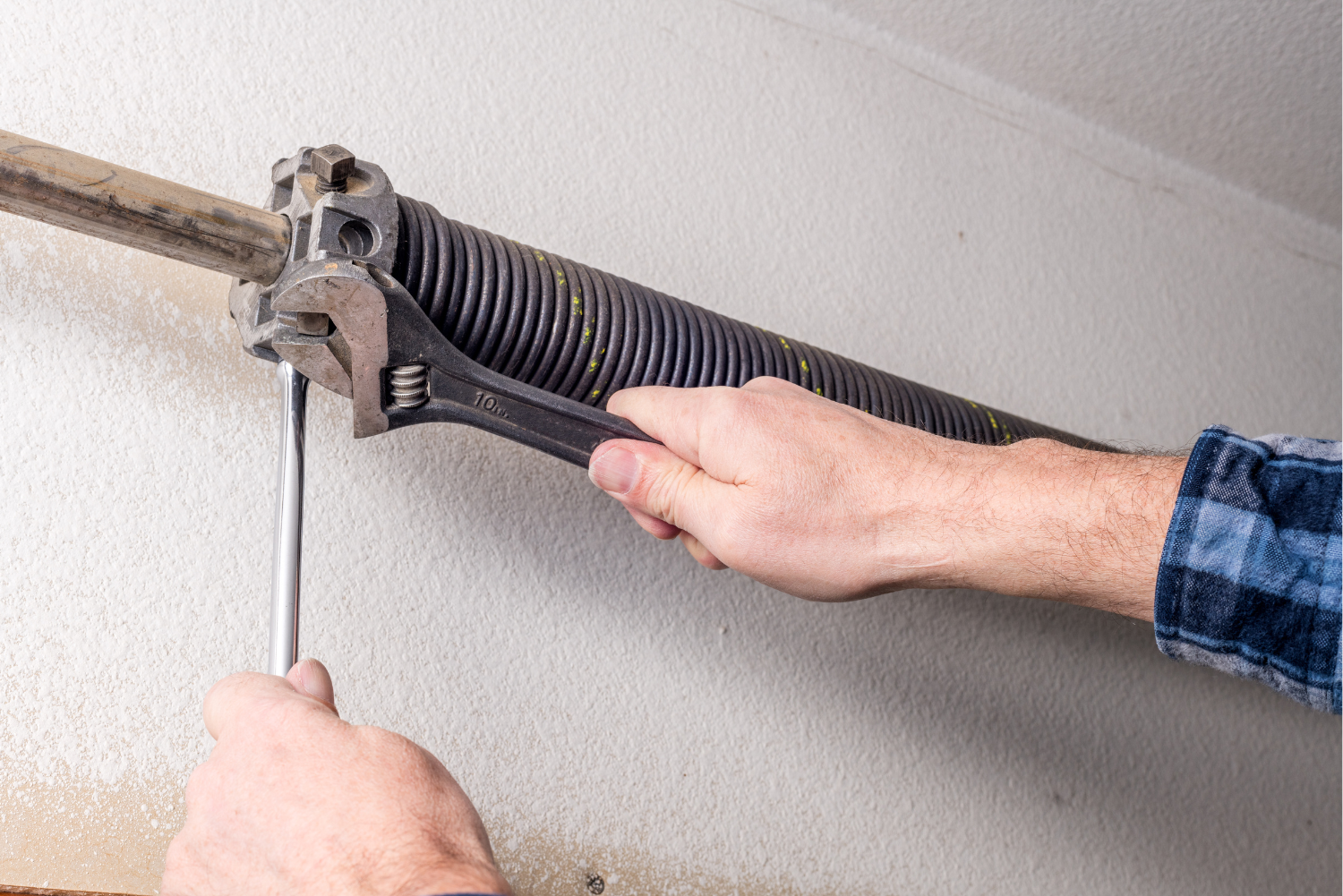
The springs are where the real risk lives. A torsion spring stores enough energy to cause serious injury the moment it slips, which is why spring work is too dangerous to DIY. It takes specific winding bars and training that most homeowners do not have, and a botched job can void the warranty on an otherwise new door.
If the work is anything more than basic upkeep, it is worth having a trained technician handle it.
How Raynor Door Authority Helps You Decide When to Replace Your Door
We tell you straight whether your door needs a repair or a full replacement. For over 40 years, our certified technicians have measured door balance, tested springs and cables, and weighed age against safety before recommending anything. You replace the door when it has earned it, not a year early.
When replacement is the right move, we handle it end to end. Our installation crews fit good, better, and best options from trusted manufacturers, size the opener to the door, and back the work with clear warranties.
We serve homeowners across our Colorado, Illinois, Indiana, Minnesota, and New Hampshire locations, with 24/7 emergency service for a door that fails without warning. Find your nearest branch on our locations page.
What You Should Do Next
Knowing when to replace a garage door starts with a look at its age, safety features, and repair history. If the signs are stacking up, here is where to go from here.
- Note the age and the symptoms. A door past fifteen years with several warning signs is a strong replacement candidate.
- Check the opener for auto-reverse and working photo-eye sensors. Missing safety features move replacement up the list.
- Contact your local Raynor Door Authority for an assessment. We inspect the door, weigh the repair-versus-replace math, and match you with a door built to last.