


Most Effective Ways to Prevent Ice Damage on Garage Doors
Key Takeaways
1. Ice damage to a garage door can accumulate when repeated freezing cycles jam the door, strain the opener, and wear out the system faster.
2. Ice damage prevention tips focus on small, steady habits: keep the threshold clear, use cold-weather lubricant, watch for sticking or gaps, and replace worn seals early.
3. Raynor Door Authority is your backup for emergency ice door repair, with technicians who can free a frozen garage door and fix ice damage.
Why Is It Important to Prevent Ice Damage on Your Garage Door?
Ice damage to the garage door is important to prevent because repeated freezing at the bottom seal, tracks, and hardware can jam the door. It could also strain the opener and shorten the life of the whole system.
Stopping ice damage early keeps your garage operating safely, protects your car and family, and helps avoid being stuck on the coldest mornings. A good rule is to treat early sticking and scraping as a warning that you need to protect the system before preventing damage turns into repairs.
Many homeowners experience frozen garage door problems in which the doors will not lift because the bottom seal is literally frozen to the ground, or packed ice in the tracks prevents the rollers from moving smoothly.
For homeowners, these problems show up in three ways.
- Safety. A door that jams, slips, or falls unexpectedly because of ice or hidden damage can injure people or damage vehicles. A 2023 clinical paper notes that around 35,000 people are injured by garage doors each year, with some injuries being severe or fatal.
- Convenience. A frozen garage door can trap your car on workdays or prevent the door open or closing fully, leaving your home exposed until it can be repaired.
- Long-term cost. Repeated freezing and thawing without proper maintenance shortens the life of the metal components, springs, and insulation, turning minor seasonal issues into major replacement projects.
Raynor Door Authority steps in as a practical partner to prevent ice damage and freezing problems. Our technicians inspect seals, rollers, tracks, and opener settings to help ensure smooth operation of your garage door and garage door opener in low temperatures.
With planned maintenance and timely repairs, homeowners can significantly prevent damage from ice and keep their garage door running smoothly through the winter months.
How Ice Damages Garage Doors and Openers and How to Resolve the Issues
Ice damage to the garage door rarely comes from a single spot. In winter, snow melt and refreezing create ice buildup in different parts of the system, and each area adds its own strain.
Over a season or two, that extra stress can leave you with a noisy, unreliable door and an opener that has to work overtime.
Ice at the Threshold
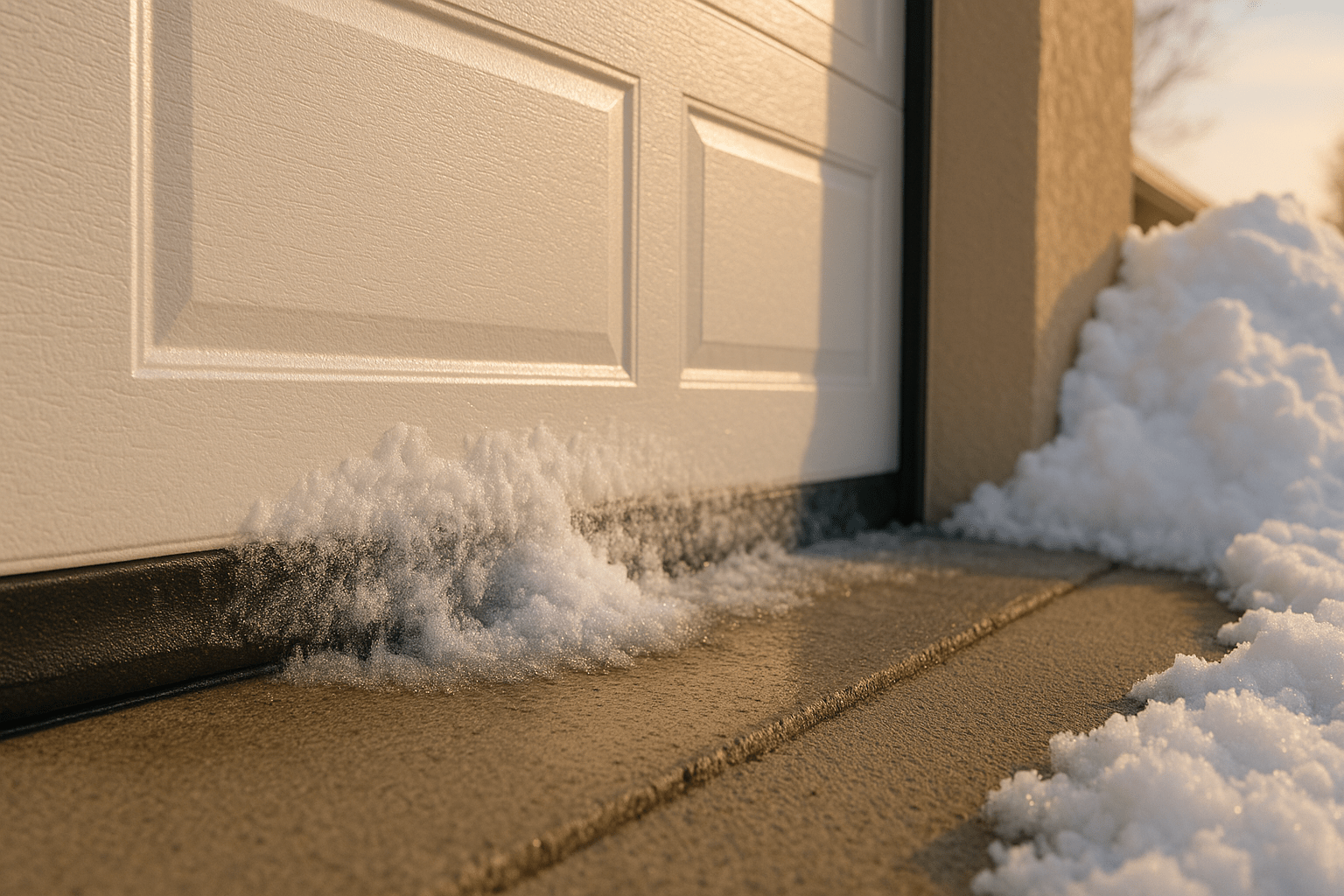
At the threshold, water, slush, and freezing rain settle along the floor where the door closes. When temperatures fall and freezing temperatures linger, that moisture refreezes, bonding the rubber bottom seal to the concrete.
The next time you open the door, the seal stretches against the ice until it tears or pulls loose in sections. Over repeated freeze–thaw cycles, this prying can also chip the concrete edge, leaving small cracks and divots that trap even more water.
The result is a threshold that freezes more often, a weather seal that no longer keeps out cold air, and a higher risk of a frozen garage door on the coldest mornings. Remember, garage doors are associated with approximately 20,000 emergency-room visits per year in the U.S.
Ice in Tracks and Around Rollers
Ice and packed snow can also build up inside the tracks or around the rollers, especially if wind blows winter precipitation into the opening or cars bring slush into the garage. When the door moves, the rollers hit these frozen ridges and start to bind rather than glide.
Homeowners usually notice this as scraping, popping, or a sudden stop-and-start motion. If this continues, the added force can push the tracks out of alignment or flatten the roller surfaces. Even after the ice melts, the door may no longer travel smoothly, which speeds up wear on both the hardware and the panels.
Ice on Hinges and Hardware
Hinges, brackets, and other exposed metal parts can collect thin layers of ice mixed with road salt and grime. Those joints are designed to pivot freely, but when they freeze or become contaminated, the panels have to twist against added resistance.
You may see the door flex in the middle sections and hear loud creaks or clanks as it moves. Over time, this extra strain can bend hinge leaves, loosen screws, and distort the edges of the panels, making it easier for something to break in hard winter weather.
Once that happens, even a dry door can feel rough and unbalanced because cold conditions have already stressed the hardware.
Makes Openers Inefficient
An opener is built to move a balanced, freely rolling garage door, not to act as an ice breaker. When the bottom seal is frozen shut or the hinges and rollers are stiff, the motor has to pull harder.
You may notice the door starting slowly, stopping partway, or reversing for no apparent reason as the safety system reacts to the extra load. In harsh cold weather, gears inside the door opener can break, chains or belts can stretch, and mounting brackets can loosen.
If force settings are set too high to push through resistance, the door may become less sensitive to obstructions, which is the opposite of safe, smooth operation.
Winter Damage Prevention Steps For Your Garage Door
Before winter settles in, a short checkup can help you avoid a frozen, noisy, or stubborn door. Use this simple checklist, and bring in Raynor Door Authority wherever something feels heavy, crooked, or unclear.
Look at the Weatherstripping and Bottom Seal
Walk around the garage door and check the weather stripping and bottom seal for cracks, gaps, or areas that feel stiff rather than flexible. If you can see daylight or feel a draft, it is a good time to replace the rubber seal or schedule a visit with Raynor Door Authority.
Some homeowners lightly coat the weather seal with a silicone-based product or a small amount of petroleum jelly. This helps prevent freezing to the ground, but it must be applied sparingly so it does not attract debris or dirt.
Watch How Rollers, Hinges, and Tracks Move
Open and close the door manually once while you stand to the side. Listen for scraping or grinding and look for rollers that wobble, hinges that move oddly, or tracks that do not look straight.
If anything seems off, have a Raynor technician inspect it before winter makes it harder to adjust the garage door parts.
Give Moving Parts a Winter-Ready Lubricant
Use a garage-door-safe product on moving parts and then wipe away any excess. A light silicone spray on roller stems and hinges, or a thin coat of lithium grease on metal contact points, helps the system ensure smooth operation in cold conditions. Keep tracks mostly clean so the rollers roll rather than slide through thick grease.
Check Door Balance by Hand
Release the opener, lift the door halfway, and see whether it stays in place with only light effort. If it drops hard or rises on its own, the springs need adjustment, which is a safe job for a Raynor technician, not a homeowner.
Test the Opener’s Safety and Force Settings
Close the door and gently block it with a piece of wood or your hand on the bottom rail (from a safe position).
The door should reverse without a struggle and stop at the floor without slamming. If it pushes too hard or stops short, ask Raynor Door Authority to fine-tune the settings.
Clean and Tidy the Threshold
Sweep away leaves, gravel, and old caulk ridges where the bottom seal meets the concrete, so water can drain rather than pool and freeze under the door.
Scan for Signs of Past Ice Damage
Look for torn seals, chipped concrete at the lip of the garage, bent brackets, or panels that no longer sit flush. If you see a pattern, booking a preseason tune-up with Raynor Door Authority is the safest way to start winter with a door you can trust.
Early Warning Signs of Ice Damage and Garage Door Problems
Early warning signs of ice damage garage door problems tend to show up in small, annoying ways before something fully breaks.
If you notice changes in how the door sounds, moves, or seals against the ground after a cold snap, your system is telling you it needs attention before winter damage gets expensive.
- Door sticks or hesitates on the first few inches. The bottom seal may be lightly frozen to the ground, or the rollers are pushing through thin ice or packed slush.
- Unusual grinding, popping, or squeaking in cold weather. Ice, road salt, or hardened grease is likely adding extra friction to rollers, hinges, or tracks.
- Torn or flattened bottom seal after a freeze. The door has probably been pulled open while frozen down, weakening the seal and increasing the likelihood of future freezing.
- Opener reverses frequently or struggles to lift the door. The motor is working against added resistance from ice, misalignment, or stiff hardware, rather than a free-running door.
- Visible gaps or daylight at the bottom or sides after storms. Cold, moisture, and ice are finding their way past worn weatherstripping, raising the risk of freezing, drafts, and water damage.
Long-Term Ice Damage Prevention With Raynor Door Authority
A winter-damaged garage door rarely fails all at once. It starts with minor warning signs: a seal that freezes down after storms, rollers that sound rough in the cold, and an opener that works harder every week.
Over time, preventive care means fewer emergencies, fewer surprise repairs, and a door system you can rely on even in the coldest months.
Here’s what you should be doing next:
- Walk through a quick winter check. Look over your weatherstripping, bottom seal, rollers, hinges, and tracks. Note any sticking, unusual noise, visible gaps, or signs of past ice damage so you know what needs attention first.
- Start a basic cold-weather care routine. Keep the threshold clear of slush and salt, use the proper lubricant on moving parts, and avoid forcing the opener when the door feels stuck. A few small habits throughout the season prevent most ice-related issues.
- Schedule a winter checkup with Raynor Door Authority. Book a visit with your local Raynor Door Authority so a technician can inspect the whole system, address early ice damage, and tune your door and opener for winter. Contact your nearest location or use the Raynor Door Authority website to schedule your service appointment.
Schedule your winter garage door checkup with Raynor Door Authority today by contacting your nearest location or submitting a service request through the Raynor Door Authority website.