


What Counts as an Emergency Garage Door Repair (And What Can Wait?)?
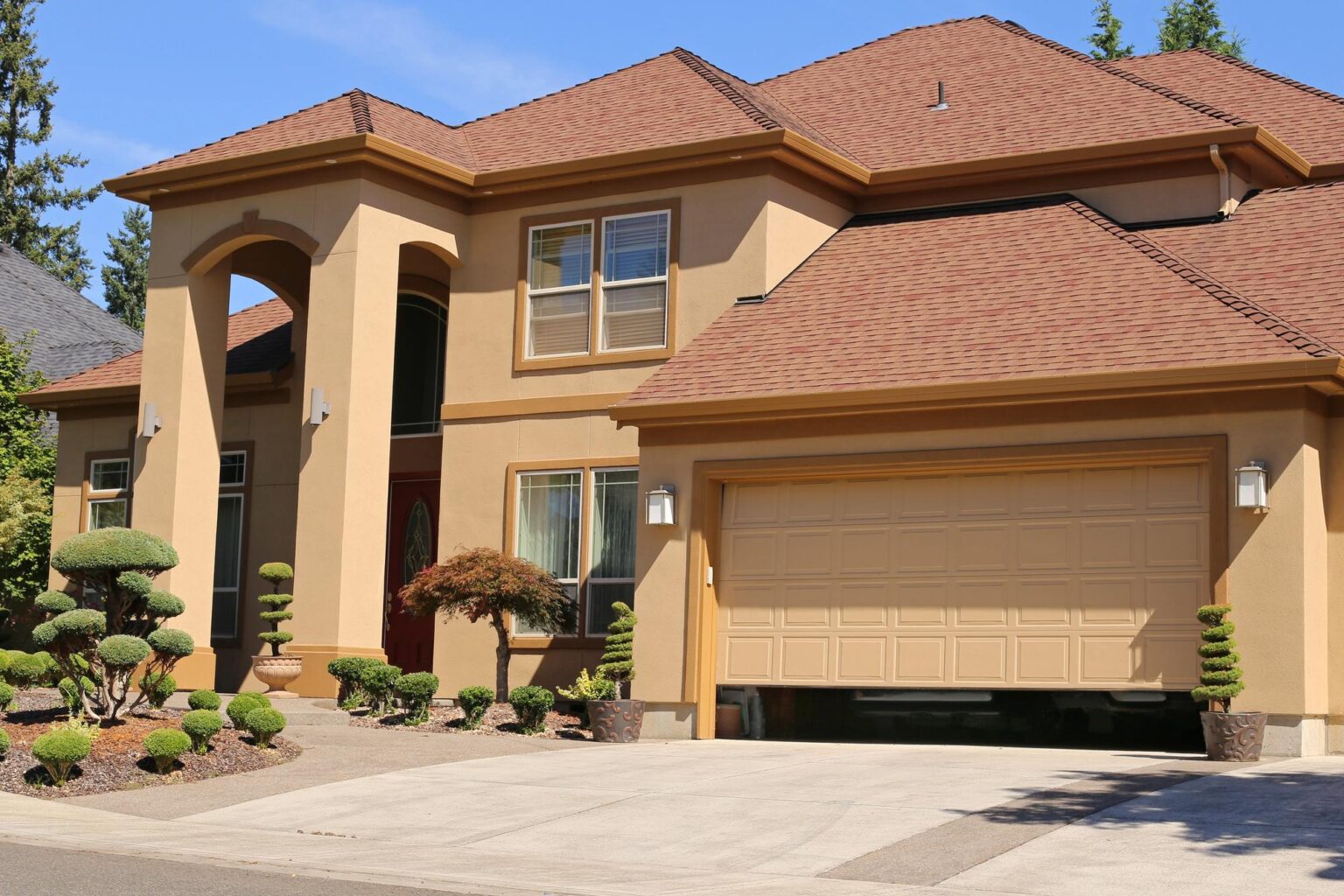
Key Takeaways
1. Emergency garage door repairs are when the problem affects safety, security, or your ability to get in or out of the garage.
2. Most emergencies include broken springs, unmoving doors, snapped cables, doors stuck open overnight, and doors jammed mid-cycle.
3. Certified technicians staff Raynor Door Authority, offering transparent pricing and providing 24/7 or weekend emergency service across multiple locations.
What Is Considered an Emergency Garage Door Repair?
An emergency garage door repair is any situation where waiting creates risk. Risk to your safety, your security, or your ability to get in and out of your own home.
If the problem is getting worse, if something could fall or snap, or if your home is exposed, it is an emergency.
Three Factors That Make a Garage Door Issue an Emergency
1. Safety hazards. The garage door is the largest moving object in most homes. When something fails, the consequences are immediate and serious.
- A broken torsion spring leaves 200 to 400 pounds unsupported
- A snapped cable can cause the door to drop or hang at an angle
- A door stuck halfway is under load and unpredictable
- Worn rollers or bent tracks can cause the door to jump and fall
- A door that reverses, jerks, or moves on its own is a crushing risk
2. Security vulnerabilities. A garage that will not close is an open invitation.
- Intruders can walk in and access your home, vehicles, and belongings
- Weather, animals, and debris enter freely
- Connected entry doors may be unlocked, giving direct access to living spaces
- A visibly broken door signals an easy target
3. Access failures. Your garage is not just storage. It is how you get to work, pick up your kids, and leave in an emergency.
- A trapped vehicle means you are stranded
- A blocked entry point can lock you out of your own home
- A door that will not open during a fire, medical emergency, or evacuation is life-threatening
If any of these apply to your situation, do not wait. Call Raynor Door Authority for 24/7 emergency garage door repair.
Common Emergency Garage Door Repairs Homeowners Face
Garage door emergencies tend to surface without warning and rarely at a convenient time. The emergencies range from minor mechanical issues to serious safety concerns.
The following are the most common emergency garage door repairs professionals see—and why each one requires prompt attention.
1. Broken Garage Door Springs
A broken garage door spring changes the entire balance of the system. Springs carry the door’s weight, which means when one snaps, the door is no longer being controlled predictably. What appears to be a door that “just won’t open” is often a door that can suddenly drop, slam shut, or strain the opener beyond its limits.
For homeowners, the safest response is to stop using the door as soon as a spring failure is suspected.
Common signs include
- A loud bang from the garage,
- Unusually heavy door
- Opener that runs but cannot lift the door
At that point, disconnecting the opener and keeping the area clear is the right move. Avoid forcing the door open, propping it up, or attempting a temporary fix.
A trained technician from Raynor Door Authority approaches spring repairs by first stabilizing the door.
2. Door Will Not Open or Close at All
A garage door that will not open or close fully is a huge inconvenience. It often signals a failure somewhere in the system that has removed the door’s ability to operate safely. At that point, the situation shifts from a routine repair to a potential emergency.
A professional repair focuses first on restoring control. Technicians identify whether the issue is mechanical, electrical, or related to safety systems.
Then stabilize the door before correcting the root cause. When a garage door cannot move at all, timely professional service helps restore access while protecting both the door system and the people who rely on it.
3. Cables Snapped or Severely Frayed
Garage door cables operate in the background but play a critical role in keeping the door balanced and moving evenly. These steel cables help guide the door as it opens and closes, sharing the load with the springs. When a cable snaps or becomes severely frayed, that balance is immediately compromised.
Cable failures escalate quickly because the door no longer lifts evenly on both sides. One side may rise while the other lags, causing the door to tilt, bind, or come off its track entirely. In some cases, the remaining cable or spring is suddenly forced to carry more weight than it was designed for, increasing the risk of additional failures.
Homeowners should stop using the garage door as soon as cable damage is visible. Fraying, loose strands, or a hanging cable are clear signs to pause.
4. Garage Door Stuck Open Overnight
A garage door stuck in the open position becomes an immediate concern, especially after hours. Even if everything inside the garage appears secure, an open door exposes the home to risks that escalate quickly when left unattended.
From a security standpoint, an open garage offers direct visibility and access to tools, vehicles, storage, and in many homes, an entry point into the living space. Opportunistic theft becomes more likely, and the longer the door remains open, the higher the exposure. For households that rely on the garage as a primary entrance, this loss of security can feel unsettling.
Weather exposure adds another layer of urgency. Overnight rain, snow, wind, or extreme temperatures can damage stored items, affect vehicles, and introduce moisture that leads to rust, mold, or electrical issues. In colder climates, open garages can also cause freezing problems that affect nearby plumbing or door components.
5. Garage Door Partially Open and Jammed
If your garage door stops halfway and refuses to move, it creates a unique kind of urgency. The door is neither fully closed nor safely open, leaving the garage exposed while also limiting access.
In this position, the door cannot be relied on to stay put, which increases both safety and security concerns. Jammed doors often result from track misalignment, damaged rollers, cable imbalance, or sensor issues.
Emergency vs Non-Emergency Garage Door Repair at a Glance
Emergency garage door repairs involve situations where waiting poses a safety concern, leaves the home exposed, or prevents you from safely getting in or out. These problems tend to escalate quickly and can place stress on both the door system and the people around it.
Non-emergency repairs, on the other hand, affect comfort, performance, or appearance rather than immediate safety. The door still functions, even if it sounds louder than usual or moves less smoothly. These issues matter, but they usually allow time to plan a repair during normal service hours without added risk.
Knowing which category your issue falls into helps you respond with the right level of urgency.
| Issue Type | Emergency or Not | Safety Risk Level | Recommended Response Time |
|---|---|---|---|
| Broken garage door spring | Emergency | High – loss of balance can cause sudden drops | Immediate/same day |
| Door stuck open overnight | Emergency | High – security and weather exposure | Immediate |
| Door will not open or close | Emergency | High – access and safety compromised | Immediate |
| Door off track or hanging | Emergency | High – unstable and at risk of collapse | Immediate |
| Snapped or severely frayed cables | Emergency | High – uneven lifting and sudden movement | Immediate |
| Garage door is partially open and jammed | Emergency | Moderate to high – unsecured and unpredictable | Same day |
| Loud or squeaking operation | Non-emergency | Low – early sign of wear | Schedule service |
| Slow or uneven movement | Non-emergency | Low to moderate – monitor for changes | Schedule service |
| Cosmetic panel damage | Non-emergency | Low – appearance-related | Schedule when convenient |
| Remote or keypad issues | Non-emergency | Low – access inconvenience | Troubleshoot, then schedule |
What to Do While Waiting for Emergency Repair
Once you have called for help, the next few minutes matter. The right steps can keep a bad situation from getting worse.
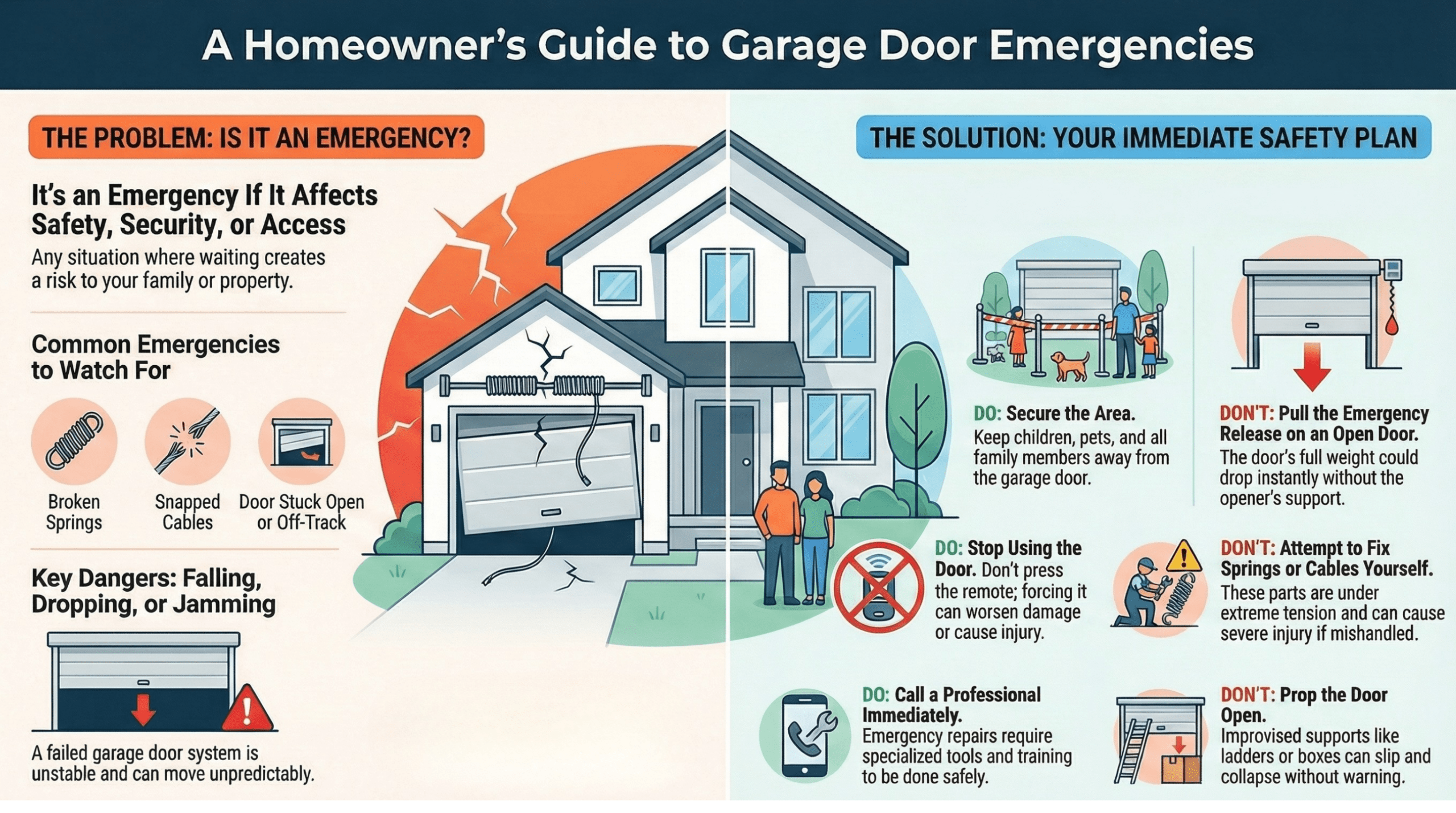
Secure the area. Keep family members, children, and pets away from the garage door. If the door is stuck open or halfway, treat the space underneath as off-limits.
Do not use the door. Even if it moves a little, stop. A door under stress can drop, jump the track, or cause further damage to springs, cables, or the opener.
Disconnect the opener if safe to do so. If the door is fully closed and stable, unplugging the opener prevents accidental activation. Do not pull the emergency release if the door is open, stuck halfway, or feels heavy.
Lock what you can. If the garage door is stuck open, lock the entry door between the garage and your home. Move valuables out of sight if possible.
Turn on the lights. A well-lit garage is less appealing to opportunistic intruders and helps the technician assess the situation quickly upon arrival.
Document what happened. Note any sounds you heard, what the door did before it stopped, and whether you attempted any fixes. This helps the technician diagnose the problem faster.
Stay reachable. Keep your phone nearby so the technician can contact you with arrival updates or follow-up questions.
What Not to Do During a Garage Door Emergency
Panic and urgency lead to bad decisions. These are the most common mistakes homeowners make, and each one can turn a repair into a replacement or an injury.
Do not force the door open or closed. A stuck door is stuck for a reason. Pulling, pushing, or prying adds stress to components that may already be at their breaking point.
Do not keep pressing the remote or wall button. If the opener is not responding, repeated attempts can burn out the motor, strip gears, or cause unpredictable movement.
Do not pull the emergency release on a door that is open or stuck halfway. The release disconnects the door from the opener. Without support, the full weight of the door can drop instantly.
Do not attempt to repair or adjust springs yourself. Torsion springs are under extreme tension. A mistake can cause the spring to snap violently, resulting in serious injury or death.
Do not prop the door open with ladders, boxes, or other objects. Improvised supports can slip or collapse without warning, letting hundreds of pounds fall.
Do not ignore warning signs and “wait it out.” A door that hesitates, jerks, or makes unusual sounds is telling you something is failing. Waiting until it stops completely often means more damage and a higher repair bill.
Do not try to reattach cables or rollers yourself. These components work under tension and require proper tools and training. A cable under load can whip or snap if handled incorrectly.
If you are unsure whether something is safe to do, the answer is do not do it. Call Raynor Door Authority and let a trained technician handle it.
Raynor Door Authority Supports Homeowners in Garage Door Emergencies
Garage door emergencies rarely happen at a good time. They show up when you are trying to leave for work, get the kids inside, or lock up for the night.
When a door will not move, will not close, or suddenly feels unsafe, homeowners need more than a fast repair. They need someone who knows how to bring the situation back under control without creating more risk.
If a garage door problem catches you off guard, a few simple steps can help keep things from getting worse:
- Take a moment to assess what is happening and whether the issue affects your home’s safety, security, or access.
- Resist the urge to force the door or try a quick fix, especially if the door feels heavy, uneven, or unstable.
- Call Raynor Door Authority to have a trained professional handle the repair safely and restore peace of mind.
Raynor Door Authority supports homeowners through these moments by being available when it matters. With 24/7 emergency service in several regions and weekend emergency coverage in others, help is within reach even when problems happen outside regular hours.
Emergency and weekend service availability includes:
- RDA DeKalb – 24/7 emergency service
- RDA Illinois Valley – 24/7 emergency service
- RDA Rockford – 24/7 emergency service
- RDA Sauk Valley – Weekend emergency services available
- RDA Fort Wayne – Weekend emergency services available
- RDA New England – Weekend emergency services available
If your garage door issue cannot wait, reach out to Raynor Door Authority today to schedule emergency service or weekend support.
FAQs