


The Best Way to Clean a Garage Door Using Stuff You Have
Key Takeaways
1. Dirt buildup on garage doors can lead to poor performance and even dangerous situations in severe cases.
2. Mold and mildew usually need a little extra care, especially in lower corners and shaded areas where moisture tends to linger.
3. If cleaning reveals worn weatherstripping, damaged panels, or other garage door issues, Raynor Door Authority can help with the repairs and service needed to keep the door looking good and working properly.
Step-by-Step Guide to Clean a Garage Door Properly
The best way to clean a garage door is to use a mild cleaner, the right tools, and a steady top-to-bottom process that removes dirt without being too rough on the surface.
Step 1: Gather Your Cleaning Supplies
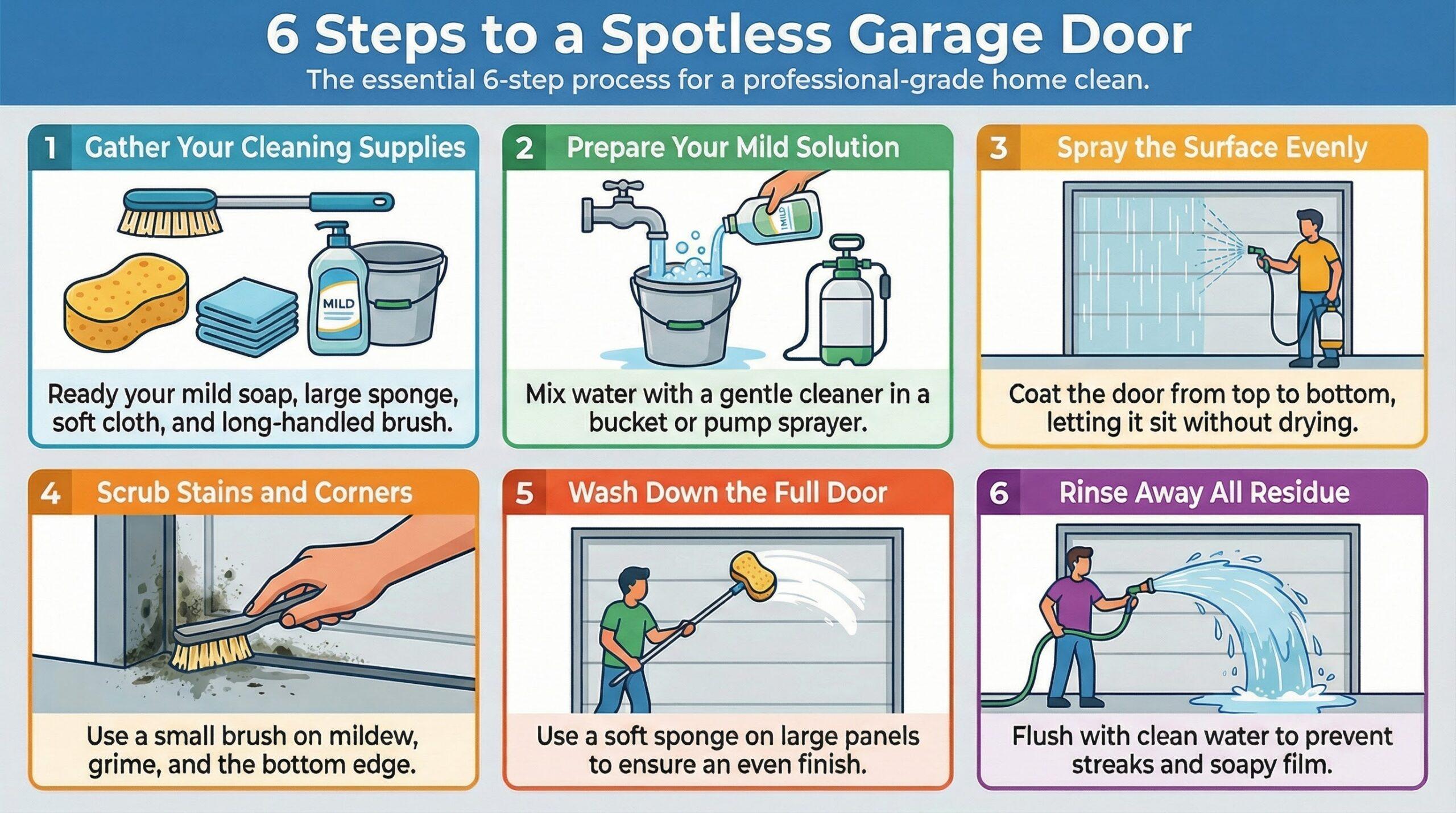
Before you start cleaning the garage door, get all your supplies together and keep them close by. A large sponge or soft cloth works well for broad sections of the door, while a long-handled brush can help with taller areas, and a smaller brush is useful for corners, edges, and spots where mold or mildew tends to collect.
- Set aside your cleaner or a bucket of mild soap and water
- Keep a pump sprayer nearby if you plan to spray the surface first
- Grab a soft sponge or cloth for washing and wiping larger sections
- Use a long-handled brush for wide areas or harder-to-reach spots
- Keep a smaller scrub brush ready for corners, trim, and stained areas
- Have a dry towel or absorbent sponge nearby for leftover water
- Place everything within reach before you begin cleaning
Step 2: Mix or Prepare Your Cleaning Solution
Once your supplies are ready, prepare your cleaning solution. This will help loosen dirt and break down mold or mildew on the garage door’s surface.
You do not need anything overly harsh for most jobs. In many cases, a mild cleaner is enough to handle everyday grime and help with stained areas.
Here’s a simple way to do it:
- Choose a mild cleaning solution that is safe for the garage door surface
- Use soap and water if you are doing general cleaning or light maintenance
- Mix the solution according to the product directions if needed
- Pour it into a bucket or pump sprayer, depending on how you plan to apply it
- Make sure you have enough mixed before you start cleaning
- Avoid using anything too harsh that could affect the door’s finish
Step 3: Spray the Garage Door Surface
After the cleaning solution is ready, apply it evenly across the garage door surface. This helps wet the area properly and gives the cleaner time to start loosening dirt, mold, and mildew before you begin scrubbing. It is a small step, but it makes the cleaning feel much less like a struggle.
Try to cover the surface evenly rather than soaking one area while leaving another dry. If you are using a pump sprayer, this part usually goes pretty quickly. Once the cleaner is on, give it a little time to sit and start breaking down the buildup.
- Spray the cleaning solution across the garage door in an even layer
- Start at the top and work your way down if that feels easier
- Make sure corners, lower panels, and stained spots get covered too
- Let the cleaner sit briefly so dirt and mildew start to loosen
- Keep an eye on the surface while it sits
- Do not let the cleaner dry completely on the door
Step 4: Scrub the Stained or Dirty Areas
Once the cleaner has had a little time to sit, you can start scrubbing the parts of the garage door that need the most attention. This is where you go after the visible dirt, mildew spots, and areas that tend to hold on to grime longer than the rest of the door.
- Use a long-handled brush on the larger panels and broad sections
- Switch to a smaller brush for corners, trim, and detailed areas
- Spend a little more time on mildew stains or darker spots
- Pay close attention to the bottom edge, where dirt tends to collect
- Scrub firmly enough to lift buildup, but not so hard that you damage the surface
- Work through the dirtiest sections first before moving across the rest of the door
Step 5: Wipe or Wash Down the Full Door
After you have scrubbed the dirtier spots, the next step is to clean the rest of the garage door so the whole surface looks even. This is the part that helps bring everything together. Instead of just cleaning a few patches and leaving the rest dull, you are giving the entire door a proper wash so it looks fresh from top to bottom.
- Use a sponge or soft cloth on the larger panels and flatter sections
- Start near the top of the garage door and work your way down
- Clean one section at a time so the process feels manageable
- Rinse or wring out your sponge as it picks up dirt
- Go back over any area that still looks dusty or streaky
- Avoid harsh scrubbing that could affect the paint or finish
Step 6: Rinse and Remove Leftover Residue
Once the door looks clean, do not stop just yet. You still want to rinse or wipe away any leftover cleaner sitting on the surface. This part is easy to overlook, but it matters. If soap or a cleaning solution dries on the door, it can leave behind a film, streaks, or dull spots that detract from the finished result.
- Rinse the garage door lightly or wipe it down with clean water
- Start at the top and work your way down again
- Pay attention to corners, trim, and panel edges where cleaner can collect
- Wipe away any leftover suds or visible residue
- Check the surface in the light to see if any film is still there
- Go over those spots again if needed, until the door looks clear
How to Clean Mold and Mildew Off a Garage Door
Mold and mildew usually need a little more attention than regular dirt. If your garage door has those black, green, or gray spots that keep showing up in corners or along the bottom panels, a quick wipe usually will not do much.
Those stains tend to settle where moisture lingers, especially if that side of the garage does not get much sun.
It helps to start with a cleaning solution designed to break down mold and mildew stains. That gives you a better chance of lifting the stain without scrubbing the surface too hard.
For example, if you notice mildew collecting in the lower corners, around the trim, or inside the grooves of the garage door panels, spraying those areas first and giving the cleaner a little time to work can make the job much easier.
Soap and Water vs. Specialized Garage Door Cleaners
Sometimes a basic wash with soap and water is enough to freshen up the surface and remove everyday dirt. Other times, especially when mold, mildew, or heavier grime starts showing up, a mild cleaning solution can do a better job without making you scrub as hard. The right choice really comes down to how dirty the door is and what kind of buildup you are dealing with.
Here is a simple comparison to help you decide:
| Cleaning option | Best for | Pros | Watch-outs |
|---|---|---|---|
| Soap and water | Light dirt and regular upkeep | Simple, affordable, and easy for routine cleaning | May not remove stubborn mildew or older stains |
| Mild cleaning solution | Mold, mildew, and heavier grime | Helps break down tougher buildup more effectively | Should still be gentle enough not to affect the finish |
Effects of Dirt on Your Garage Door’s Performance
While dirt may seem harmless, too much accumulation can shorten the life span of your garage door. In addition, it can even lead to poor performance.
The cleanliness of your garage door not only affect appeal. It can also ensure that your garage door is working properly and safe to operate at all times.
- Inefficient operation. Overcollection of grime along the tracks and rollers creates friction. This will prevent your door from moving smoothly and cause jerky motions at times.
- Increased wear and tear. When dirt gets into moving parts like rollers, hinges, and springs, it acts like an abrasive. This speeds up wear, shortening the lifespan of key components.
- Increased noise. Grinding, squeaking, or scraping sounds can develop from dirt buildup. These noises may be indicative of where dirt is concentrated and requires cleaning.
- Risk of track misalignment. Heavy buildup in the tracks can sometimes push the door off its proper path. Misalignment can cause your door to malfunction or derail in severe cases.
- Sensor interference. Dust or debris on safety sensors can block the signal, causing the door to stop unexpectedly or refuse to close.
- Rust and corrosion. Dirt traps moisture, which can lead to rust forming on metal parts. Corrosion weakens components and affects overall reliability.
- Poor sealing and insulation. Grime along the bottom seal or edges can prevent the door from closing tightly, letting in air, pests, or water.
Common Garage Door Problems and How to Fix Them
Keep Your Garage Door Looking Better With Raynor Door Authority
Cleaning your garage door does not have to be a big project to make a noticeable difference. With the right cleaner, a soft touch, and a little extra attention to mildew-prone areas, you can freshen up the door and help it stay in better shape over time.
And once the dirt is gone, it is often easier to spot the things that need more than cleaning, like worn seals, damaged trim, or hardware that is starting to give out.
After reading this, here are the next steps to take:
- Inspect the door. Take a close look at the panels, corners, trim, and lower edges for dirt, mildew, and any spots where moisture tends to stick around.
- Clean it section by section. Work from top to bottom, gently scrub the dirtier areas, and rinse everything well so no soapy film is left behind.
- Call Raynor Door Authority if needed. If cleaning reveals bigger issues like worn weatherstripping, damaged panels, track problems, or other garage door problems, reach out to Raynor Door Authority. Their team can help fix the parts that cleaning alone cannot resolve.
Need a hand with the next step? Contact Raynor Door Authority to schedule service with a local garage door expert.