


Top 10 Professional Tips for Commercial Garage Door Repair
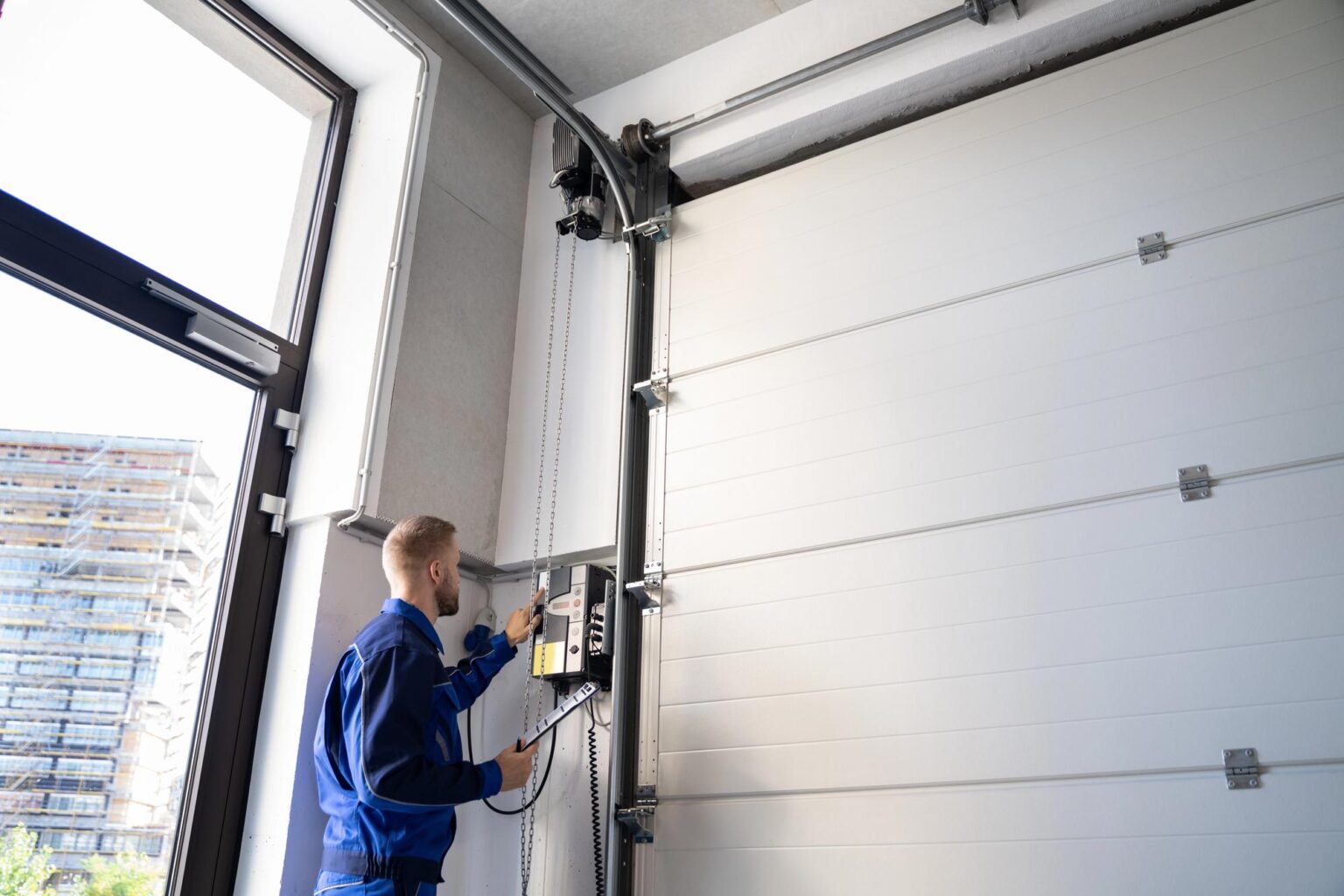
A stuck garage door can shut down a loading dock, delay shipments, and cost your business money every hour it’s out of service. Most commercial door problems are preventable if they are caught early.
This guide covers 10 repair tips from Raynor Door Authority technicians, how to decide when a door is worth fixing versus replacing, and which repairs are safe to handle in-house versus when to call a professional.
Key Takeaways
1. Identifying common commercial garage door issues and spotting early warning signs prevents breakdowns, safety hazards, and costly downtime.
2. Knowing which repairs can be handled in-house and when to call a professional keeps your team safe and ensures the door is fixed correctly.
3. Working with Raynor Door Authority provides expert maintenance and guidance on repairs or replacements to keep your facility running efficiently.
Expert Tips for Commercial Garage Door Repair from Raynor Door Authority
Commercial garage doors take a beating. High cycle counts, forklift traffic, weather exposure, and daily wear break down components faster than residential doors. Knowing which repairs you can handle in-house and which ones require a professional saves money and prevents small problems from turning into operational shutdowns.
We asked the service technicians at Raynor Door Authority to share the repair tips they give to facility managers and business owners. These recommendations come from decades of hands-on experience servicing commercial doors across warehouses, loading docks, and industrial facilities.
1. Tighten Loose Hardware
Professional Tip: Check for rattling during operation, visible vibration, or hardware that moves when touched.
Commercial doors cycle hundreds of times per month. That constant movement loosens bolts, brackets, and fasteners over time. A socket wrench and 10 minutes can prevent a bracket failure that sidelines the door entirely. Check roller brackets, hinges, and track mounts. Tighten anything that’s not snug.
2. Realign the Tracks
Professional Tip: Look for sticking or binding, uneven gaps between the door and track, or scraping sounds during operation.
Tracks shift from impact, temperature changes, or mounting hardware that’s worked loose. Use a level to check vertical alignment and a tape measure to confirm both tracks are equidistant from the door.
Minor adjustments can be made by loosening the mounting bolts, tapping the track into position, and retightening. If the track is bent or warped, call a professional; forcing a door through a damaged track can cause further damage.
3. Replace Worn Rollers
Professional Tip: Listen for grinding or squeaking, watch for jerky door movement, or inspect for visible flat spots, cracks, or chips on the rollers.
Worn rollers make the opener work harder, shorten its lifespan, and create noise complaints. Nylon rollers are quieter and don’t require lubrication. Steel rollers last longer in high-cycle commercial applications but need regular greasing. Replace rollers in sets; mixing old and new causes uneven wear.
4. Lubricate Moving Parts Quarterly
Professional Tip: Schedule this as routine maintenance, but move it up if you hear squeaking or grinding or notice stiff operation.
Use a silicone-based or lithium-based lubricant, not WD-40, which is a solvent that strips existing lubrication. Apply to hinges, rollers, springs, and the opener’s chain or screw drive. Wipe off excess to prevent dust buildup. Skip the tracks; lubricated tracks cause the door to slip.
5. Replace Frayed or Damaged Cables
Professional Tip: Stop using the door immediately if you see visible fraying, rust, kinks in the cable, or if the door hangs unevenly.
Cables are under extreme tension and can cause serious injury if they snap. If you see any damage, call a professional immediately. Never attempt cable replacement yourself. The repair requires releasing spring tension safely and properly seating the new cable on the drum.
6. Replace Worn Springs
Professional Tip: Watch for doors that won’t stay open, feel heavy when lifted manually, or show gaps between coils on torsion springs.
Springs have a limited cycle life, typically 10,000 to 20,000 cycles for standard springs, more for high-cycle commercial springs. When one fails, replace both. Mismatched springs cause uneven lifting and accelerate wear on the new spring. This is not a DIY repair – torsion springs store enough energy to cause fatal injuries.
7. Replace Weatherstripping
Professional Tip: Inspect for visible cracks or gaps, water or debris inside the door threshold, noticeable drafts, or pest intrusion.
Bottom seals and side weatherstripping degrade from UV exposure, temperature swings, and physical wear. Damaged seals let in moisture, dust, and pests while increasing energy costs. Most weatherstripping can be replaced in-house. It slides into a retainer channel or attaches with adhesive. Measure carefully and order material rated for commercial use.
8. Clean and Realign Photo Eye Sensors
Professional Tip: Check the sensors if the door won’t close, reverses for no visible reason, or the indicator lights are blinking.
Photo eyes get knocked out of alignment by forklifts, pallets, and foot traffic. They also collect dust, cobwebs, and grime that block the beam. Wipe the lenses with a soft cloth first. If the problem persists, loosen the mounting bracket, adjust the sensor until the indicator light goes solid, and retighten. Both sensors must point directly at each other.
9. Replace Worn or Damaged Hinges
Professional Tip: Inspect hinges if panels sag or bow, the door binds during operation, or you see cracks or elongated bolt holes.
Hinges flex every time the door bends around the track curve. Over thousands of cycles, they fatigue and crack. Damaged hinges let panels shift out of alignment, which stresses the entire door system. Match the replacement hinge gauge to the original; commercial doors need heavier hinges than residential applications.
10. Upgrade the Opener or Control System
Professional Tip: Consider replacement if you experience slow response times, inconsistent operation, frequent resets, or if the opener lacks current safety features.
Openers wear out, and older units may not meet current safety codes. Modern commercial openers offer variable speed control, battery backup, and smart monitoring that alerts you to problems before they cause downtime. If your opener is more than 10 years old and showing signs of strain, replacement often costs less than repeated repairs.
When to Call a Professional to Perform Garage Door Repairs
While minor maintenance tasks like lubrication and visual inspections can be handled in-house, certain repairs should always be left to professionals.
If you experience any of the following issues, seek expert assistance immediately:
- The door is stuck and won’t open or close.
- Springs or cables appear broken or frayed.
- The garage door opener is unresponsive despite troubleshooting.
- There are signs of track misalignment or warping.
- The door is making grinding, screeching, or popping noises.
Professional garage door repair services have the expertise and tools necessary to diagnose and fix complex issues safely and efficiently. Hiring a trusted provider ensures compliance with safety standards and prolongs the life of your door.
When to Repair vs. Replace Your Commercial Garage Door
Not every problem requires a new door, but not every door is worth fixing. Making the wrong call costs money either way. Sinking repair dollars into a door that’s near the end of its life wastes budget. Replacing a door that just needed a spring swap wastes even more.
Here’s how to evaluate the decision.
| Factor | Favors Repair | Favors Replacement |
|---|---|---|
| Door age | Under 10 years | Over 15 years |
| Repair frequency | Once every 2-3 years | Multiple times per year |
| Repair cost | Over 50% of the new door | Poor insulation, gaps, and seal damage |
| Structural condition | Panels, tracks, frame intact | Rust, warping, panel damage |
| Safety features | Current and functional | Outdated or missing |
| Energy efficiency | Adequate insulation | Poor insulation, gaps, seal damage |
| Operational fit | Meets current needs | Undersized, too slow, wrong type |
Repair Makes Sense When:
The door is under 10 years old. Commercial garage doors typically last 15-30 years, depending on cycle count, environment, and maintenance. A door in its first decade usually has plenty of life left if the core structure is sound.
The problem is isolated to one component. A broken spring, worn rollers, or a faulty opener doesn’t mean the whole system is failing. These are normal wear items with predictable replacement intervals.
Repair costs stay under 50% of replacement. This is the general threshold. If a repair quote exceeds half the cost of a new door and installation, the math starts favoring replacement, especially on older units.
The door still meets your operational needs. If the door size, speed, insulation, and security features still work for your facility, repair keeps you running without the disruption of a full installation.
Replacement Makes Sense When:
Repairs are becoming frequent. One major repair every few years is normal. Multiple service calls per year signal compounding failures; fixing one worn component just shifts stress to the next weakest part.
The door is 15+ years old and showing multiple issues. Age alone isn’t a reason to replace, but age combined with recurring problems, visible rust or corrosion, and panel damage usually means the door has reached the end of its service life.
Safety features are outdated or missing. Older doors may lack photo eye sensors, auto-reverse functionality, or manual release mechanisms that meet current codes. Retrofitting these features sometimes costs more than upgrading to a modern door.
Energy costs are climbing. Uninsulated or poorly sealed doors bleed heating and cooling dollars. A new insulated door can pay for itself through energy savings in climate-controlled facilities, cold storage, or buildings with HVAC systems working overtime.
Your business needs have changed. Higher cycle counts, larger vehicles, tighter security requirements, or faster operation speeds may exceed what your current door can handle. Upgrading matches your equipment to your actual workflow.
Keep Your Commercial Doors Running Strong with Raynor Door Authority
Commercial garage door issues slow down operations and raise safety risks. This conclusion highlights why staying ahead of repairs matters and how we help you keep your doors performing reliably.
Our team delivers fast, professional service that protects your equipment, reduces downtime, and ensures your door is repaired or replaced with the right long-term solution.
Here are your next steps:
- Inspect your door for loose hardware, worn rollers, misaligned tracks, or damaged seals and address any items that may cause bigger problems later.
- Review your repair history to decide if your door is still worth repairing or if recurring issues show it’s time for a replacement.
- Contact Raynor Door Authority to schedule expert service or set up a maintenance plan that keeps your commercial doors operating safely and efficiently.
Reach out today and keep your facility running at full strength.