


What Is the Best Garage Door Insulation for Your Property?
Key Takeaways
1. Insulating your garage door reduces energy loss, lowers utility bills, and keeps your garage comfortable year-round.
2. The right insulation depends on your climate, how you use your garage, and whether it’s attached to your living space.
3. Raynor Door Authority can assess your garage, recommend the best insulation solution, and handle the installation so you get lasting results.
Why Insulate Your Garage Door?
An uninsulated garage door lets heat escape in winter and lets hot air flood in during summer. This temperature exchange forces your HVAC system to work harder, especially if your garage shares a wall with your living space.
Insulating your garage door reduces this energy loss, which can lower your heating and cooling bills. It also keeps your garage at a more stable temperature, protecting stored items like paint, tools, and holiday decorations from extreme heat or freezing conditions.
Beyond energy savings, insulation adds rigidity to your garage door panels, making them more durable and resistant to dents. It also dampens noise from street traffic and the opener operation.
Does Garage Door Insulation Work?
Yes. Insulated garage doors can reduce heat transfer significantly compared to uninsulated single-layer doors. The effectiveness depends on the insulation type and R-value (a measure of thermal resistance). Higher R-values mean better insulation. Homeowners with attached garages or living spaces above the garage typically see the most noticeable difference in comfort and energy costs.
If you’re unsure which insulation level is right for your home, Raynor Door Authority can assess your garage and recommend doors with the appropriate R-value for your climate and needs.
Types of Garage Door Insulation Materials
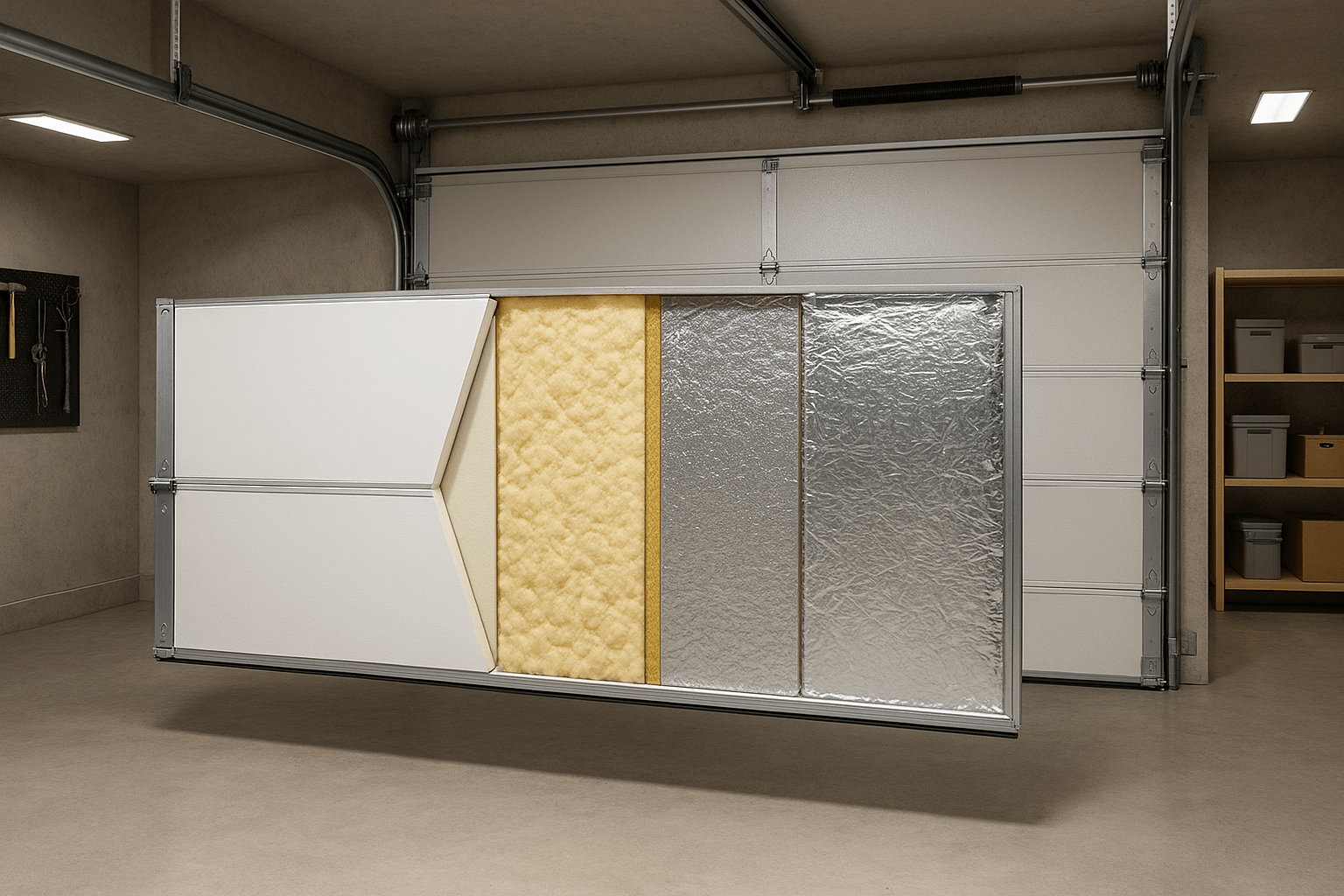
Garage door insulation comes in a few different materials. Each one has its own price point, performance level, and best use case. Below are the most common garage door insulation types for every situation.
Polystyrene Foam
Polystyrene is one of the most popular options. It comes as rigid foam panels that fit between your door’s layers. R-values (a measure of how well it blocks heat) typically range from 4 to 6.5.
Best for: Homeowners who want decent insulation without spending a lot. It works well in areas with mild to moderate weather.
Polyurethane Foam
Polyurethane is sprayed into the door panels where it expands and hardens; thus, it is otherwise known as spray foam insulation. This makes the door stronger and provides better insulation than polystyrene, with R-values often between 12 and 18.
Best for: Homes with very hot summers or cold winters. It’s also a smart choice if your garage is attached to your house or if you have a room above the garage.
Reflective Insulation
Reflective insulation uses a foil-like material to bounce heat away from your garage instead of absorbing it.
Best for: Hot, sunny climates where keeping heat out is the main goal. It’s less helpful in cold areas where you need to keep warmth inside.
Fiberglass Insulation
Fiberglass is the cheapest option, but it doesn’t insulate as well as the others. It can also soak up moisture over time, which can cause mold in humid areas.
Best for: Detached garages where you just need basic coverage and want to keep costs low. Skip this one if your area gets a lot of humidity.
Best Garage Door Insulation Methods for Higher Energy Efficiency
Insulating your garage door is just one piece of the puzzle. These five methods work together to keep your garage comfortable and reduce energy waste.
1. Weatherstripping the Edges of the Garage Door
Weatherstripping seals the gaps around your garage door’s sides and top. This stops air leaks, blocks dust and pests, and keeps conditioned air from escaping.
You can install weatherstripping into the wood doorstop or use V-shaped strips to seal gaps between panels. New weatherstripping comes in rolls that you cut to size and attach with nails or screws. Press the flange tight against the door to create a solid seal.
Professional Tip: This is a cheap and easy fix that makes a big difference in older doors with worn seals. If you feel drafts around the edges, start here.
2. Installing a Bottom Seal
A bottom seal is a rubber strip attached to the bottom edge of your garage door. It blocks water, dirt, cold air, and pests from sneaking in under the door. If you see light, feel drafts, or notice debris coming through the bottom, your seal needs replacing.
The type of seal depends on your door material. Wood doors typically use an angled strip-style seal. Metal doors use a gasket that slides into an aluminum channel.
Professional Tip: Bottom seals wear out faster than other components. Check yours once a year and replace it at the first sign of cracking or gaps.
3. Adding a Garage Door Threshold Seal
A threshold seal works like a bottom seal, but it attaches to the garage floor instead of the door itself. It creates a raised barrier that blocks surface water, leaves, and debris.
Threshold seals are usually made of vinyl and installed with adhesive. They’re often more durable than bottom seals and work well on uneven floors.
Professional Tip: Thresholds work great for garages at the bottom of sloped driveways. Just keep in mind they also trap water inside, so skip this option if your garage tends to flood or collect moisture.
4. Insulating the Garage Walls and Ceiling
If your garage shares a wall with your living space or has a room above it, insulating just the door won’t be enough. You’ll also need to insulate the walls and ceiling.
For walls, look for cracks and gaps first. Then staple foam or fiberglass batts between the wall studs and cover with drywall. For ceilings, use thicker insulation (R-30 or higher) cut to fit between the rafters. Make sure there are no gaps.
Professional Tip: This method has the biggest impact on indoor comfort and energy bills, especially for attached garages with bedrooms or living areas nearby.
5. Upgrading to a Pre-Insulated Garage Door
If your current door is old, damaged, or has no insulation, replacing it with a factory-insulated door is often the smartest long-term choice. Pre-insulated doors come with polyurethane or polystyrene already built in, and they’re designed to seal tightly from the start.
These doors also tend to be quieter, more durable, and better looking than DIY-insulated options.
Professional Tip: If your door is more than 15 years old or showing signs of wear, a full replacement often makes more sense than patching together multiple fixes.
Signs Your Garage Door Needs Better Insulation
Not sure if your garage door insulation is doing its job? Here are some signs it may be time for an upgrade.
- Your garage is always too hot or too cold. If your garage feels like an oven in summer or a freezer in winter, your door probably isn’t blocking heat transfer well. This is especially noticeable in attached garages.
- Your energy bills have gone up. A poorly insulated garage makes your HVAC system work harder, especially if you have living space above or next to the garage. If your bills have climbed without explanation, your garage could be the culprit.
- You feel drafts near the door. Stand near your closed garage door on a windy day. If you feel air coming through the edges, bottom, or panels, your seals and insulation aren’t keeping the outside air out.
- You see condensation or moisture inside. Condensation on the walls, ceiling, or door panels can signal poor insulation. Moisture buildup can lead to mold, rust, and damage to stored items.
- Your door is a single-layer panel. Older or builder-grade garage doors often have just one layer of steel or wood with no insulation inside. These doors offer almost no thermal protection.
- Your door is more than 15 years old. Even if your door was insulated when it was installed, age and wear can reduce its effectiveness. Seals break down, panels warp, and insulation compresses over time.
If any of these sound familiar, it may be time to talk to a professional. Raynor Door Authority can inspect your garage door, identify where you’re losing energy, and recommend the right insulation solution for your home. Contact us to schedule an assessment.
Better Comfort and Lower Energy Costs With an Insulated Garage Door
A poorly insulated garage door leaks heat, raises energy bills, and makes your garage uncomfortable in every season. Strong insulation fixes that by keeping temperatures stable, protecting your belongings, and adding strength to your door.
We help you choose the right insulation and sealing solutions for your climate and garage setup. From upgrading worn seals to installing a high-R-value insulated door, Raynor Door Authority makes your garage more efficient and easier to live with.
Next steps
- Check for drafts, worn seals, or extreme temperatures around your current door.
- Decide which insulation level fits your climate and how you use your garage.
- Contact Raynor Door Authority so we can recommend and install the best insulation upgrade for your home.
If your garage is wasting energy or never feels comfortable, reach out today and let us improve your door’s insulation for good.
Frequently Asked Questions