


7 Things That Secretly Drive Up Your Garage Door Price in 2026
Key Takeaways
1. Size, insulation level, hardware grade, and whether the opener gets replaced account for most of the gap between a low quote and a high one.
2. April 2026 tariff changes widened what steel and aluminum duties apply to, so a price you were quoted in 2024 no longer holds.
3. Raynor Door Authority provides all-inclusive garage door installation quotes with the hardware grade written out, so you can see what you are paying for before any work starts.
What Factors Affect the Cost of a New Garage Door?
Eight variables account for most of the spread between quotes.
A new garage door runs roughly $800 to $2,200 installed for a standard single-car steel model and $1,700 to $4,000 for an insulated double. Custom wood and full-view glass climb past $10,000.
Those spreads are wide because the same three words describe very different products. Here is what moves the number.
Size and Configuration
Doubling the width of an opening more than doubles the cost. A 16-foot door needs a heavier counterbalance system, stronger track, and often a reinforcement strut a single-car door does not require.
Height matters too. Moving from a standard 7-foot door to an 8-foot door typically adds $150 to $400. Non-standard openings cost more still, since the door becomes a factory order that adds both money and lead time.
Material
Material sets the floor on price and the ceiling on maintenance. Steel dominates residential installs, though gauge matters more than the material name.
| Material | Typical Installed Cost, Double Door | Best Suited For | Trade-Off |
|---|---|---|---|
| Insulated steel | $1,700 to $3,700 | Most attached garages, cold climates | Thinner gauges dent easily |
| Composite or fiberglass | $2,400 to $5,500 | Humid and coastal regions | Can fade or chalk over time |
| Aluminum with full-view glass | $3,000 to $7,000 | Modern facades, natural light | Weakest insulation performance |
| Wood or custom carriage house | $3,500 to $10,000 and up | Historic homes, custom facades | Requires refinishing on a schedule |
Insulation Level
Insulation is where quotes diverge most quietly. Stepping from a single-layer door to a double- or triple-layer insulated one typically adds $150 to $600, and the two can look identical from the street.
Be careful with the R-value itself. It is a calculated panel figure, and DASMA covers the difference between R-value and U-factor in Technical Data Sheet #163. A panel rating says nothing about air leakage at the perimeter or between sections.
The sectional door standard, ANSI/DASMA 102, requires published thermal and air infiltration values for installed doors to follow the ANSI/DASMA 105 test method. If your garage is attached or has living space above it, ask for that installed-assembly figure rather than the panel number.
Windows, Hardware, and Finish
Glass is the most common upgrade and the most variable in price. Plain inserts are modest, while insulated or obscure glass across multiple sections adds a large share of the base cost.
Decorative hardware and factory color finishes work the same way. Neither changes how the door performs, so weigh them as appearance spending.
Spring and Hardware Grade
This is the line item most homeowners never ask about, and it determines what the door costs over its life. A cycle is one full open and close, and springs sell in 10,000-cycle and 25,000-cycle grades at meaningfully different prices.
One caveat matters. DASMA notes in TDS #190 that spring cycle life does not necessarily match rated door cycle life, since handling, installation, and climate all affect it.
A higher grade buys longer expected service, not a guarantee. Two quotes can sit within a hundred dollars of each other and differ by years on hardware.
The Opener
Whether the opener is included is often the largest single swing between two quotes for the same door. A new one adds roughly $300 to $900 installed, with chain drives at the low end, belt drives in the middle, and smart or jackshaft units at the top.
Reusing one only makes sense if it is safe and current. Any unit made before 1993 predates federal entrapment protection requirements aligned to ANSI/CAN/UL 325 and should be replaced regardless of budget.
One correction worth having, because it circulates incorrectly: battery backup is not a UL 325 requirement. It is a California statute, and in that state a replacement door cannot legally be connected to an opener lacking one.
Labor, Access, and Site Conditions
Installation labor typically runs $250 to $500, with a two-person crew needing three to six hours. Low headroom, tight side room, a finished ceiling, or a second-story install all add time and sometimes specialty track.
Removal and disposal of the old door usually runs about $100 and is not always included. Confirm it.
Local Code and Wind Load
Where you live changes the door you are allowed to buy. The sectional door standard sets minimum wind load by whatever the local authority having jurisdiction requires, with structural testing to ANSI/DASMA 108 and windborne debris resistance to ANSI/DASMA 115 where mandated.
Reinforced construction costs more than the standard equivalent, and permit fees vary by jurisdiction.
How Much Does a New Garage Door Cost in 2026?
Most homeowners land between $1,200 and $4,500 installed, with the middle of the market sitting near $2,500 for an insulated double-car steel door.
Below roughly $1,000, you are looking at a bare single-layer door. Above $6,000, you are into custom material or a non-standard opening.
The reason published averages disagree so wildly is that each one prices a different job. Industry cost surveys get around that by pricing the same job every time, and their benchmark runs roughly like this:
- A 16-by-7-foot opening, the standard two-car size, with the old door and tracks hauled away.
- A four-section insulated steel door on new galvanized tracks, so none of the old hardware carries over.
- Insulated glass in the top section, a real cost adder that entry-level quotes usually leave out.
- The existing opener reused, which means the benchmark contains no opener at all.
Change any line and the number moves. A bare uninsulated single door with reused tracks and no windows lands far below that spec, and a custom carriage-house door in a non-standard opening lands well above it.
Why Are Garage Door Prices Higher in 2026?
Garage doors are made mostly of steel and aluminum, and tariffs on both metals rose sharply over the past year. That is the main reason a quote today looks different from one you would have gotten in 2024.
What changed is public record. Section 232 duties on steel and aluminum sit at 50%, the Commerce Department added 407 product categories to the covered list in August 2025, and an April 2026 change widened the tariffs to apply to the full value of covered goods rather than only their metal content.
You may see claims that garage door prices are up 35% to 40% since 2024. That figure comes from an industry estimate rather than an official source, so take it as a rough signal and not a hard fact.
The practical effect is simple. Manufacturer price increases have been landing more often than usual, so ask how long a written quote stays good before you sign it.
Is a New Garage Door Worth the Cost?
Probably, but not for the reason most articles give. You have likely seen the claim that a new garage door returns close to 270 percent of its cost at resale. That comes from one industry report, and a second published the same year disagrees sharply.
The 2025 Remodeling Impact Report from the National Association of Realtors and the National Association of the Remodeling Industry found no tracked project recovering more than 100 percent of its cost. Garage door replacement did not place among its twelve highest at all.
Both reports work the same way. Contractors estimate the cost, agents estimate the resale value, and the two get divided. These are opinion surveys about a future sale, not records of what buyers paid.
NAR’s deputy chief economist, Jessica Lautz, has pointed to “the disparity between the joy experienced post-remodel and the actual cost recovery” as the recurring finding. Read it this way: a new door helps at resale, and any specific percentage is a marketing number.
The energy case is also more modest than marketing suggests. An insulated door cuts heat transfer through what is usually the largest opening in the envelope, but Department of Energy guidance treats sealing and insulation as a whole-envelope job. A good door is most effective when the garage-to-house wall is sealed, too.
Garage Door Repair vs. Replacement: What's Best for Home Value?
How Should You Compare Garage Door Quotes?
Compare specifications first and totals second. Two quotes are only comparable when they describe the same door, hardware, and scope.
Ask every bidder for the same five things:
- Door model, gauge, and construction. Two-layer and three-layer doors at the same nominal thickness perform differently.
- Tested insulation values. Request the assembly U-factor alongside the panel R-value.
- Spring cycle rating. This tells you when you will next be paying for hardware.
- Opener status. Confirm whether the quote reuses, upgrades, or replaces the existing unit.
- What is excluded? Disposal, permits, track replacement, and reinforcement struts are the usual omissions.
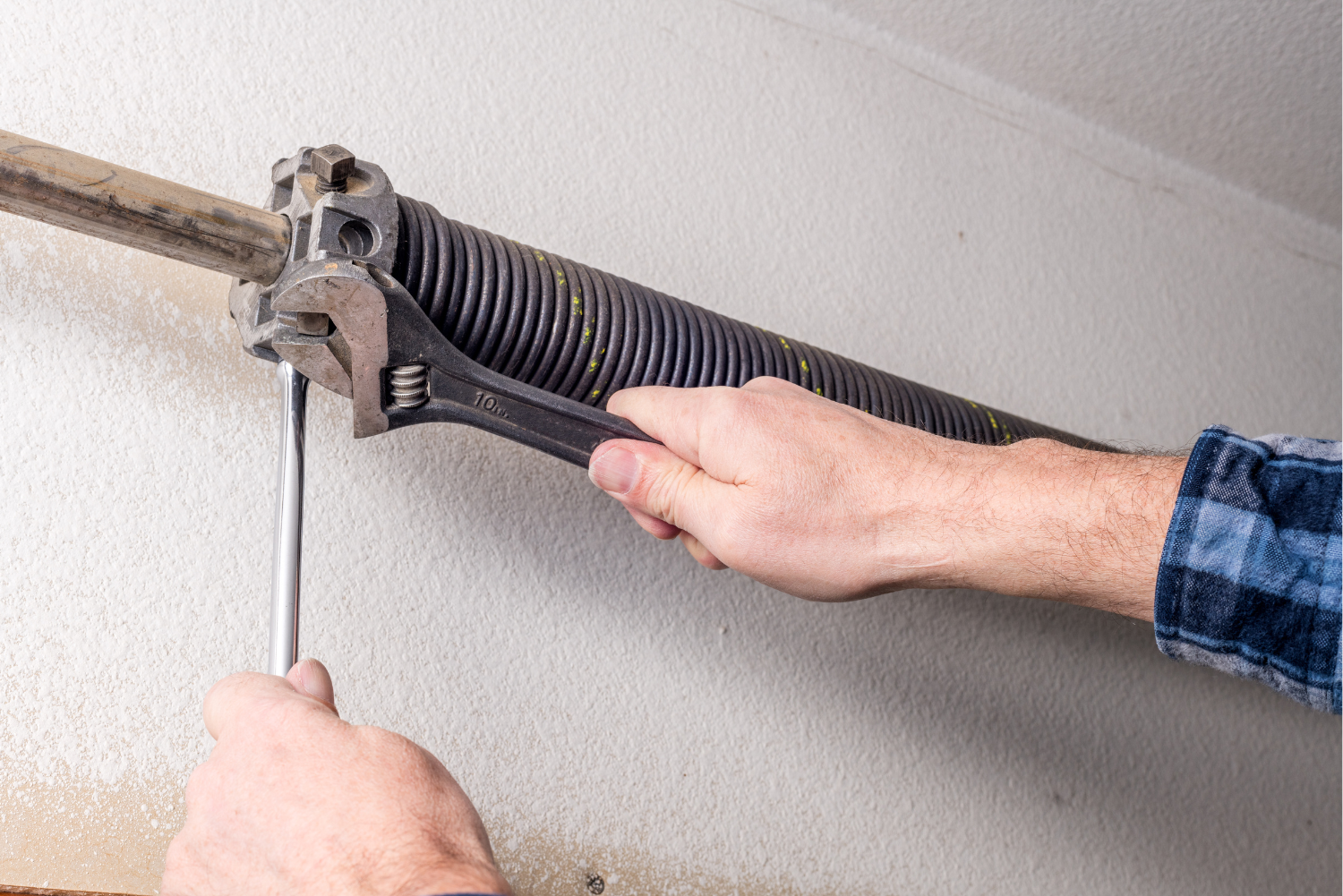
If a contractor will not itemize, that tells you something on its own. A quote that jumps to replacement without telling you what the repair would cost deserves the same scrutiny. Sound panels with a failed spring or a dead opener are usually a repair rather than a full replacement.
Where Raynor Door Authority Fits
Pricing a garage door well requires someone willing to explain the line items rather than defend a lump sum. That has been the approach at Raynor Door Authority since our first location opened in 1984.
Our certified technicians specify doors for the conditions they actually face, which, across most of our territory, means real winters, real wind, and attached garages sharing a wall with living space. Because we are a factory-authorized Raynor dealer servicing every major brand, the recommendation follows the opening rather than whatever is easiest to stock.
Every quote is all-inclusive and itemized. You see the door, hardware grade, labor, and disposal before anything is ordered, which is the only way the comparison above works.
What You Should Do Next
Understanding what drives the price of a new garage door puts you in control of the quoting process. Here is where to go from here.
- Measure your opening and note headroom and side room, since both determine which track systems are available to you.
- Decide whether the opener stays or goes before collecting quotes, because that one choice makes bids comparable or useless.
- Ask every bidder, not just us, for spring cycle grades and tested insulation values in writing.
- Contact your local Raynor Door Authority for an itemized estimate on installation and replacement.