


What Is the Best Garage Door Opener for Heavy Doors?
Key Takeaways
1. The best garage door opener for heavy doors is a wall-mount jackshaft or a 1 HP (or higher) belt or chain drive, because heavy and oversized doors need more torque than a standard half-horsepower opener delivers safely.
2. Wood construction, decorative carriage hardware, insulation layers, and high-lift track all add effective resistance that pushes you toward a stronger opener.
3. Raynor Door Authority installs and services heavy-duty openers matched to your specific door across multiple U.S. locations, with certified technicians who weigh and balance the door before recommending a system.
Which Drive Type Is Best for a Heavy Door?
The best opener for a heavy door is usually a wall-mount jackshaft, with a 1 HP belt or chain drive as the next best choice. The drive type matters as much as the horsepower number, because each one handles weight differently.
| Drive Type | How It Handles Heavy Doors | Best Fit |
| Wall-mount jackshaft | Mounts beside the door on the torsion shaft, delivers high torque with low vibration, frees the ceiling | Heavy carriage doors, oversized doors, high-lift track, low headroom |
| Chain drive | Rugged and strong, handles heavy doors well at lower cost, but louder | Detached garages, budget-conscious heavy-door installs |
| Belt drive | Quiet and capable in higher horsepower, but extreme weight is better suited to jackshaft or chain | Attached garages where noise matters and the door is heavy but not extreme |
| Screw drive | Strong and fast with few moving parts, but sensitive to temperature swings | Moderate-weight heavy doors in stable climates |
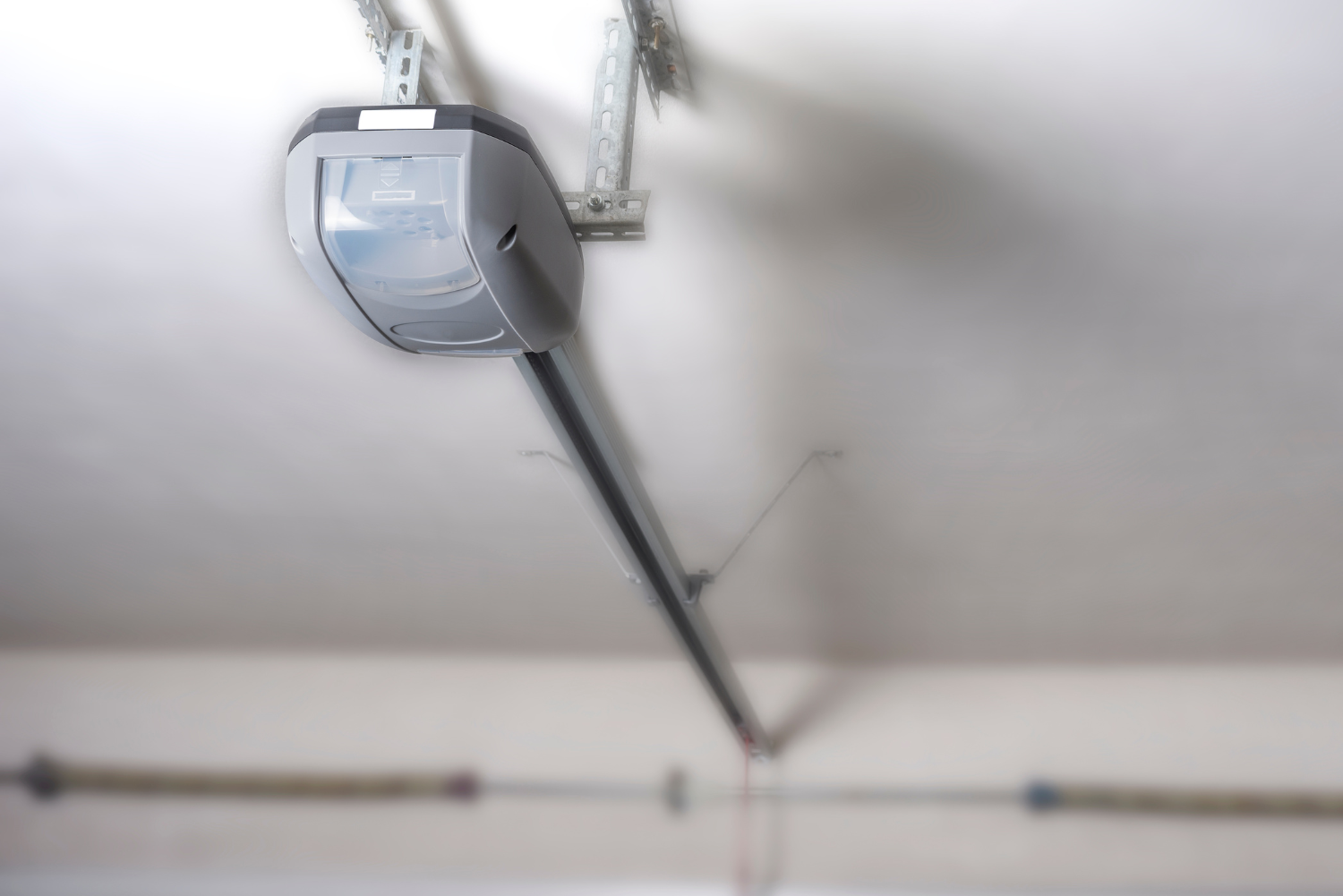
For the heaviest residential doors, the wall-mount jackshaft is the standout. It bolts to the torsion bar and drives the door through the existing spring system rather than dragging a trolley down a rail. That gives it excellent torque and almost no vibration, and it clears the ceiling entirely, which matters for tall doors and high-lift track.
If you are not sure which drive type your door calls for, Raynor Door Authority can make the call for you. Our certified technicians weigh the door and check the track and hardware, then recommend the drive type and horsepower that fit. This is so you are not guessing between a jackshaft, a belt, and a chain on your own.
Which Opener Is Best for Heavy Wood Doors Specifically?
The best garage door opener for heavy wood doors is almost always a wall-mount jackshaft or a 1 HP DC opener, because wood adds resistance that other heavy doors do not.
Wood is the one material where the binding and swelling problem is unavoidable. Even a perfectly balanced wood door fights more friction than a steel door of the same weight, and that resistance grows in humid months. A jackshaft handles this gracefully because it works through the torsion system rather than dragging a swelling door up a rail.
For a heavy wood carriage door with decorative hardware, the combination of a wall-mount jackshaft, properly sized torsion springs, and a cable tension monitor is hard to beat. The opener has the torque, the springs carry the weight, and the monitor stops the motor instantly if a cable goes slack.
What Counts as a Heavy Garage Door?
A heavy garage door is generally any door that exceeds the weight and resistance a standard half-horsepower opener was built to handle. That includes a few common types.
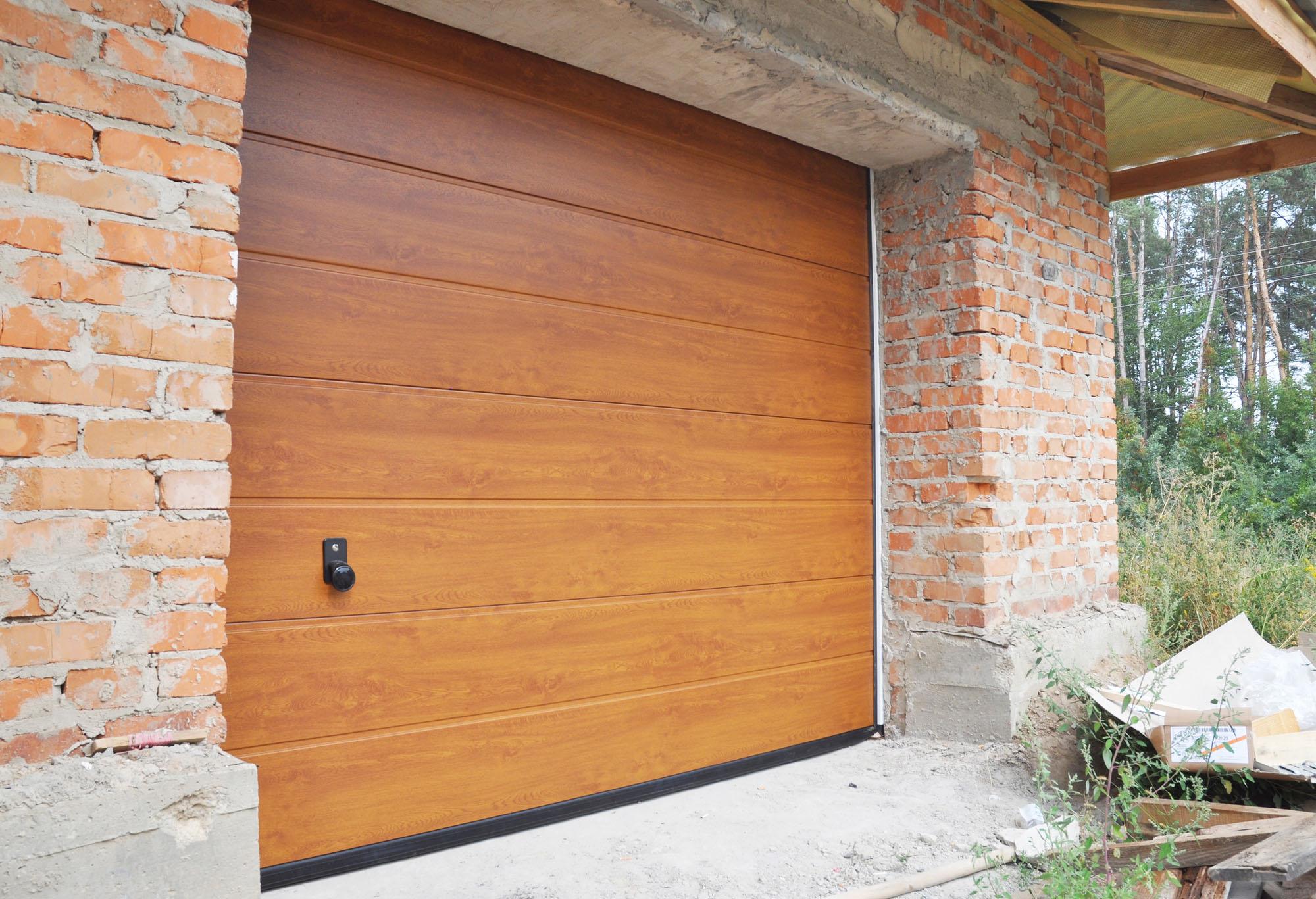
Solid wood and natural hardwood doors top the list. A custom wood carriage door can weigh two to three times what a comparable steel door weighs.
Triple and quadruple-layer insulated steel doors are also heavy, as are oversized doors (taller than 7 feet or wider than 16 feet) and doors loaded with decorative hardware, windows, or full-glass panels.
Weight alone does not tell the whole story, though, and that is where homeowners often get the sizing wrong.
What Garage Door Factors Affect the Opener You Need?
The opener does not just lift dead weight. It fights friction, binding, and resistance that add to the effective load the motor sees on every cycle.
Wood doors are the clearest example. Solid wood swells in humidity and binds slightly in the tracks, and that resistance effectively adds twenty to thirty pounds to what the motor has to overcome, even on a well-maintained door.
Decorative carriage hardware and heavy window inserts add their own resistance. High-lift and vertical-lift track systems change the geometry of the pull and demand more from the motor than a standard lift does.
Two doors of identical weight may need different openers. A 250-pound steel door that glides on nylon rollers is an easier job than a 250-pound wood door that swells every summer. When in doubt, size up.
How Much Horsepower Does a Heavy Garage Door Need?
Heavy doors need 3/4 HP at an absolute minimum, and 1 HP or higher is the safer choice for the heaviest doors. Here is how the common ratings break down for residential doors.
A 1/2 HP opener handles standard single and average double doors but has almost no margin for a heavy door. A 3/4 HP opener is the popular middle ground and manages heavier double doors, insulated steel, and lighter wood doors. For solid wood, oversized, carriage-style, or high-lift doors, a 1 HP or 1 1/4 HP opener (or a wall-mount jackshaft) is the right call.
Modern openers use DC motors with a lifting force that does not map cleanly onto the old AC horsepower numbers, so a “3/4 HP equivalent DC” rating is common. What matters is the rated lifting force and whether the manufacturer lists your door size and weight as within range.
According to the International Door Association residential opener guidelines, heavy wood doors, oversized doors, and high-lift configurations call for 1 HP or higher. Choosing one step above the minimum gives better longevity, quieter operation, and the ability to handle the spring imbalances that develop over time.
What Safety Features Matter Most on a Heavy-Door Opener?
A heavy door is more dangerous when something fails, so the safety features carry more weight than they would on a light door.
Every modern opener includes photo-eye sensors that reverse the door if the beam is broken, and an auto-reverse mechanism that reverses on contact with an obstruction. In a heavy door, the force-reversal system has to be sensitive and well-calibrated. A heavy door builds more momentum and hits harder, so a sluggish reversal can cause real damage or injury.
Wall-mount jackshaft openers often add a cable tension monitor that stops the motor the instant a lifting cable snaps or goes slack. That matters because a snapped cable on a heavy door can let the door drop suddenly, and stopping the motor right away limits the damage.
These systems are governed by UL 325, the safety standard for door operators. This is why every compliant opener sold since 1993 includes auto-reverse and photo-eye protection. On a heavy door, having a technician verify the force settings after installation is the difference between a safety system that works and one that only looks like it does.
What Happens If You Use an Underpowered Opener on a Heavy Door?
An underpowered opener on a heavy door fails early, runs hot, and wears out everything around it. The motor strains on every cycle, generating heat that accelerates wear on the gears, the drive system, and the door hardware.
The lifespan gap is significant. A correctly sized opener typically runs twelve to fifteen years with routine maintenance, while an undersized opener fighting a heavy door often fails within five to eight years.
A straining motor also stresses the springs and rollers, which can turn one failure into several. And an opener working at the edge of its capacity is more likely to stall or behave unpredictably, especially in cold weather when everything moves a little more stiffly.
How to Choose the Right Opener for Your Heavy Door
Choosing the right opener comes down to matching the system to the real load, not the label weight. A few steps make the decision clear.
- Have the door weighed and balanced first. A technician disconnects the opener and weighs the door directly. This is the only way to know the true load.
- Account for the material and hardware. Add resistance for wood, decorative carriage hardware, heavy glass, and multiple insulation layers.
- Factor in the track. High-lift and vertical-lift track call for a step up in horsepower.
- Match the drive type to the garage. Jackshaft for the heaviest doors and tight ceilings, belt for attached-garage quiet, chain for budget-conscious detached garages.
- Size up when you are between ratings. A motor that runs below its limit lasts longer and runs quieter.
What Garage Door Opener is Right for You?
How Raynor Door Authority Helps You Match an Opener to a Heavy Door.
Raynor Door Authority has helped homeowners across the United States make this decision for over 40 years. Our certified technicians weigh and balance the door, check the spring system, and account for material and track before recommending an opener, so the system you get is sized for the real load.
We install and service heavy-duty openers from leading manufacturers, and we provide:
- Wall-mount jackshaft installation for the heaviest doors and tight ceilings
- Door weighing and spring balancing as part of every assessment
- Same-day installation for most opener replacements
- 24/7 emergency service when an existing opener fails under load
- Service across multiple U.S. locations including Denver, Fort Collins, Rochester (MN), Fort Wayne, and Manchester (NH)
What You Should Do Next
The best garage door opener for heavy doors is the one matched to your door’s real weight and resistance, not just its size. Getting that right saves you years of premature wear and a replacement you did not need.
- Find out what your door actually weighs. A balanced door is the starting point for any opener decision.
- Note the material and hardware. Wood, carriage hardware, glass, and insulation all push you toward a stronger opener.
- Contact Raynor Door Authority for an assessment. We weigh the door, check the springs, and match an opener built for the load.
FAQs